
EN

您造出了机器人。我们带来 Field。
物理 AI 的一致性操作层硬件提供身体。AI 提供能力。MetaCore 提供连续性。上下文、交互历史、恢复、证据与限定权限随时间保持有效——位于现有机器人技术栈之上。
MetaCore Field — 共享语义操作层原则在物理 AI 上的投射 →
机器人已经拥有身体与逻辑。MetaCore 增加 运行一致性。
MetaCore is not another robot brain or controller. It is a layer above the existing stack that preserves shared state across people, AI, engineering and machines—so context, decisions, evidence and validated experience do not disappear after every task.
机械、电子、传感器、执行器与物理机器人本体。
固件、ROS2、PLC、运动规划、VLA/模型与确定性执行。
上下文、记忆、反思、证据、人类意图、权限与工程知识,处于同一个连续状态中。
MetaCore 工程师 + 工作组
项目上下文、主 AI 协调、需求、CAD/BOM、供应商、测试、测量、决策历史、交接与已验证的工程知识。
工作组 · 主 AI · 工程记忆MetaCore 机器人运行时
工作语义、工作对象、运行事件、技能智能、恢复、人工交接、健康历史,以及现有机器人技术栈之上的已验证运行记忆。
上下文 · 技能 · 事件 · 记忆MetaCore 企业上下文
团队、项目、工厂、机器人集群、CNC、PLC、供应商与组织规则,成为一个具有明确权限与审计结构的统一上下文模型。
多站点 · 集群 · 治理 · 证据从一台独立设备到 一个活的生产系统。
面向工程师、电气专家、机械师与自动化团队的枢纽。我们把物理设备与控制、上下文和操作员决策连接起来——而不替换已经可靠运行的部分。
机器人技术
人形机器人、机械臂、协作机器人、移动机器人、机器视觉与安全运动执行。
ROS2 · Isaac · MoveIt · 厂商 SDKCNC 与制造
机床、G 代码、工装、工件、质量控制,以及经验回流到生产循环。
CNC · CAM · G 代码 · 质量保证电气工程
PLC、伺服驱动、变频器、I/O、能耗监测与诊断信号。
PLC · 伺服 · 变频器 · MODBUS机械
执行器、减速器、力、公差、振动、温度与部件寿命。
执行 · 力 · 公差智能控制
传感器综合、数字孪生、配方、状态与自适应工艺控制。
OPC UA · MQTT · 数字孪生系统集成
来自不同制造商的设备获得共享的工作对象、事件语言与可审计历史。
边缘 · API · 事件 · 知识不同的机器人。同一个公司记忆。
MetaCore Field 在项目、工程师、AI 工作组与不同机器人之间维持一个受治理的共享状态。每台机器只接收它所需的上下文,而它的事件回流到公司的运行记忆。
负责协调;绝不凌驾于人
在专职 AI 角色之间分配工作,保持共享项目上下文,汇总结果,并把决策包交给负责的工程师或经理。
机械 + 机器人 + 电气 + 质量
各专业在同一项目上下文中工作,减少在人员、班次、版本修订、供应商与验证阶段之间的知识流失。
以人为中心,而非“机器里的人”
MetaCore 帮助机器人更好地理解人类意图、工作条件、边界、不确定性,以及它必须停止或询问人的时机。
从一台执行机器到 一个持续的、具备上下文感知的伙伴。
Digital Heart 不是情绪的模仿。它是为机器人实现的 MetaCore Field:持续的关系与工作上下文、运行记忆、与证据关联的反思、人类边界,以及已验证的工程经验。
一台不从零开始的机器。
模型可以变。机器人可以变。但工作对象、决策历史、恢复经验与人类定义的边界必须持续存在。
人不再发送整个世界。他们发送变化。
有状态意图压缩 把人类语言解释为相对于持久共享运行上下文的 ΔIntent。系统仅在该状态足够可靠时才重建相关状态。
人类身边的 AI 专家。由人类主导。
操作层不把人排挤出流程。它收集机器状态、解释风险、提供决策上下文,并在需要工程师批准之处停止执行。

 ONE EXPERT · MANY SYSTEMS
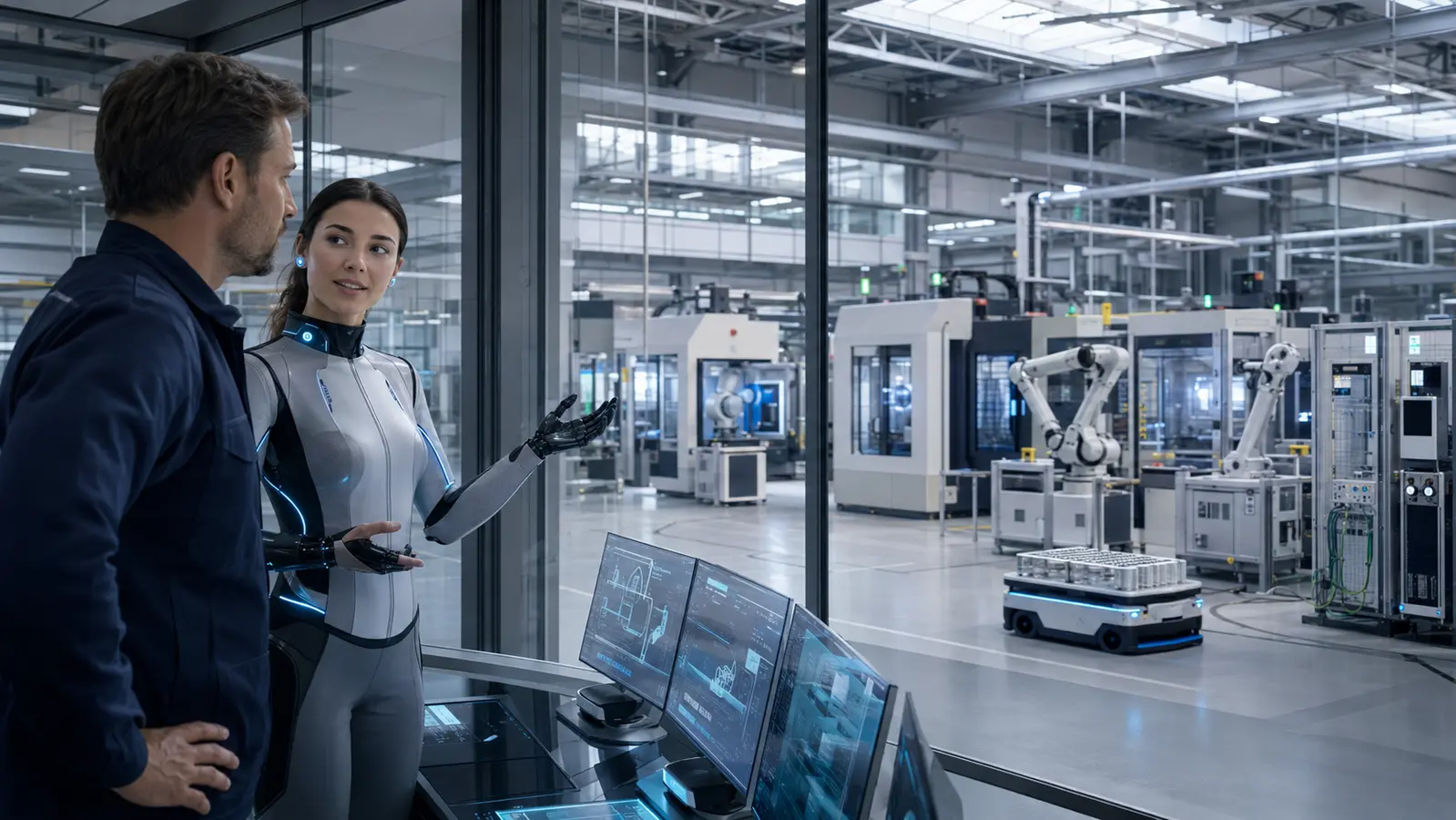
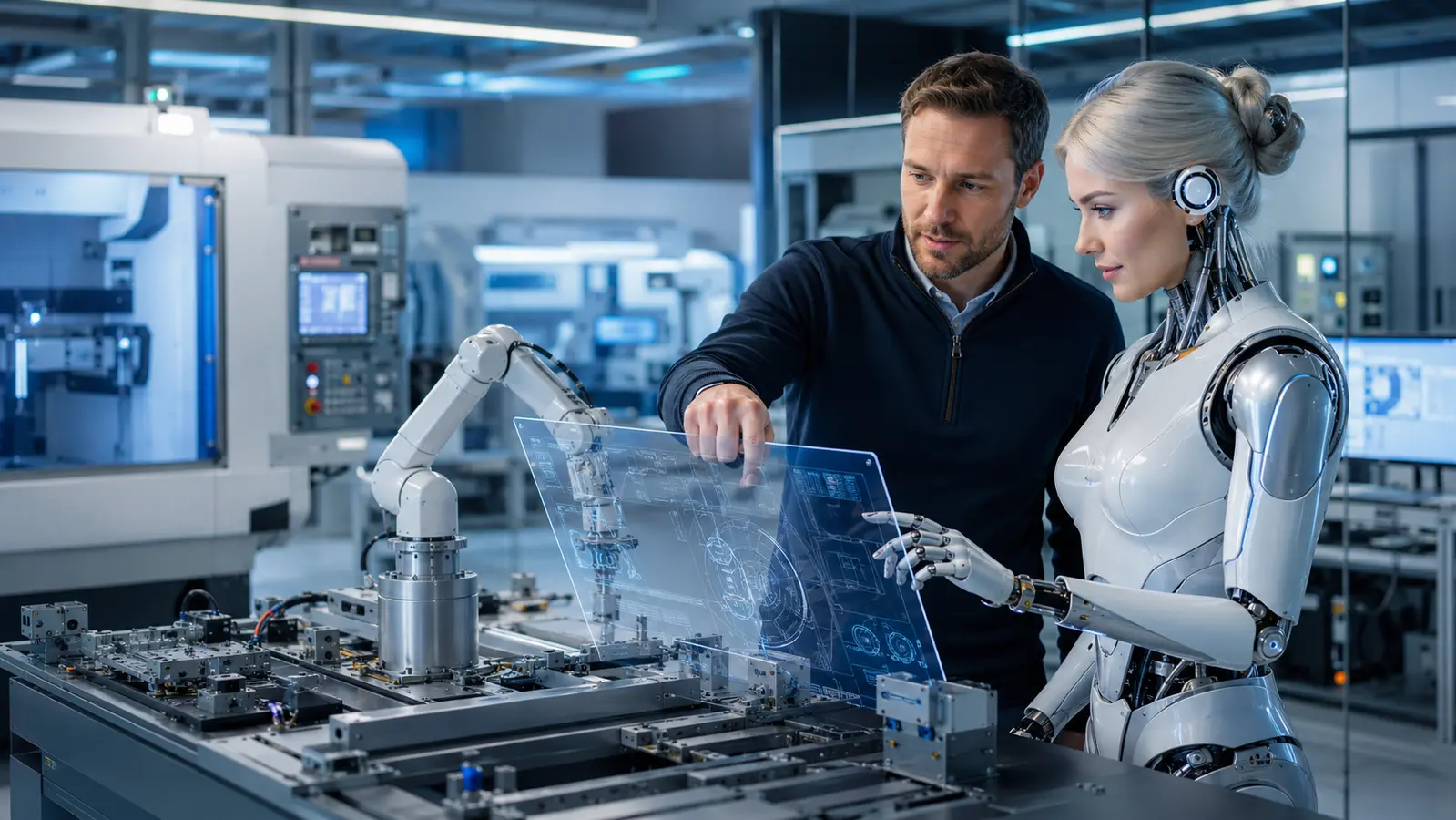
The human does not need to talk to ten different bots.
他们与一位熟悉的 MetaCore 专家沟通。该专家了解上下文,选择正确的设备或软件代理,协调动作,并把清晰的结果交还给人。
设备已经知道如何执行。系统需要理解工作本身。
控制栈解决轨迹、伺服周期、PLC 逻辑、电机运行与仿真。MetaCore 位于执行之上:它治理工作语义、风险、试验历史、人工批准,以及知识向系统的回流。
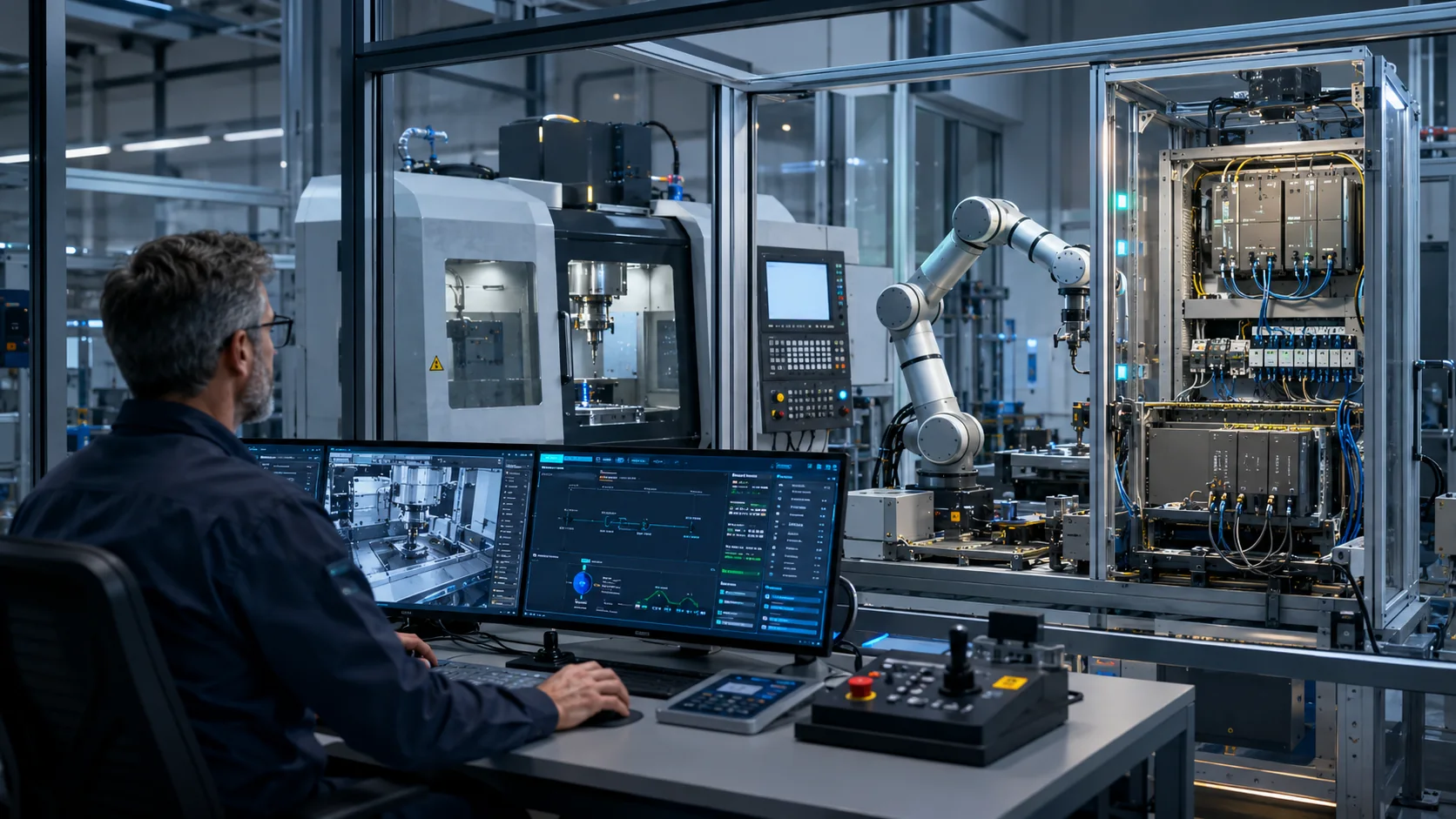
One operator. Full production state.
MetaCore 把 CNC、机器人、PLC、传感器与工艺历史连接成一个可解释的决策场。
Scripted execution
- No shared skill memory
- Errors are poorly explained
- A new object means new tuning
- Experience scatters across robots and operators
Operational intelligence
- Work has context
- Klaidos klasifikuojamos
- The human receives a clear handoff
- Knowledge is versioned and validated
仅有指令对设备来说是不够的。系统需要理解 what the work means.
CNC、机器人或 PLC 可以精确执行程序。MetaCore 增加目的、对象状态、风险、既往试验历史,以及给操作员的明确交接规则。
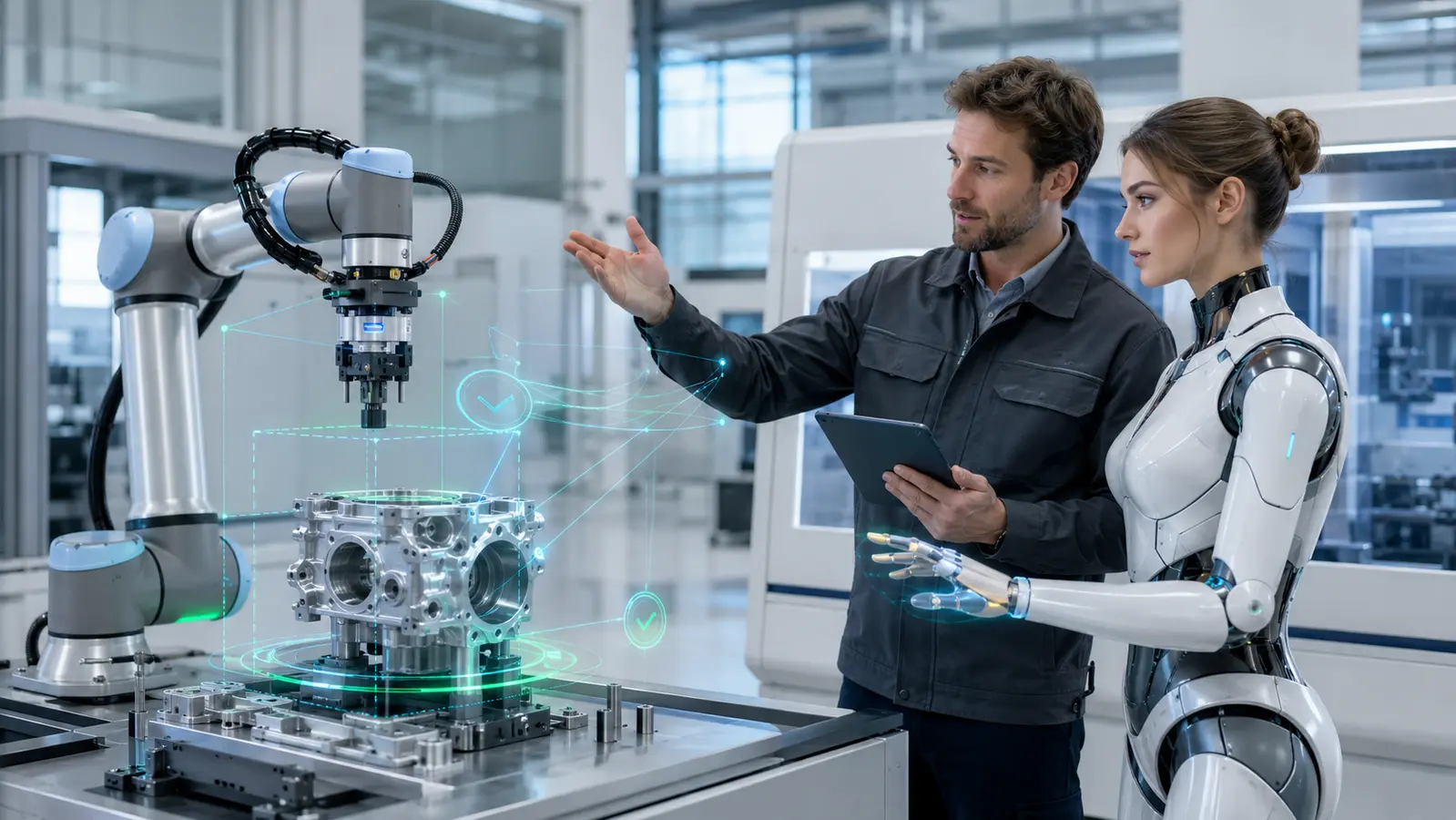
为什么需要该操作,以及它在整体生产流程中的位置。
Limits for the human, part, tool, gear, and process.
尝试过什么、在什么条件下、用什么参数、结果如何。
何时自动停止,以及把什么决策包交给工程师。
A thought is not a direct motor command. It becomes a safely interpreted intent.
非侵入式脑电可以识别一组有限的、预先训练过的人类意图。MetaCore 绝不让神经信号直接控制执行器:它把识别到的意图转换为工作对象,检查上下文、风险与权限,然后才把有边界的任务发送到机器人执行层。
Non-invasive EEG captures features of electrical activity.
Artifacts are filtered and stable features are extracted.
A limited set of trained intents is classified.
Intent is linked to the object, environment and risk.
检查自主边界以及由策略定义的授权/批准门。
ROS2, PLC or a vendor SDK executes the physical action.
实用系统通常只识别有限的一组意图或指令,而轨迹与稳定由机器人控制软件处理。
延迟、分类准确率、个体校准、疲劳、误触发与安全策略,必须通过独立测试验证。
MetaCore connects above automation — without breaking or replacing it.
PLC、CNC 控制器、ROS2 或制造商 SDK 仍负责确定性控制。MetaCore AI 专家不替换它们——它把状态转换为可理解的工程决策,连接上下文,并把决策权留给由策略与范围授权的角色。
An integrative layer, not an invasive one
我们从真实信号、工作历史与运行事件出发。MetaCore 解释正在发生什么、什么值得做、风险是什么——而受控动作只在具备明确限制、批准与回滚路径时出现。
Not just a program or a skill. A complete work contract.
工作对象不是给机器的指令。它是一份清晰的工作契约:要达到什么、我们与什么协作、哪些限制不可逾越、AI 专家何时必须停止,以及完成后我们必须证明什么。
mission: machine bearing housing
machine: CNC_5AXIS_04
part: housing_AL6082_batch_27
tool: endmill_D10_T17
constraints:
  spindle_load_max: 82%
  vibration_rms_max: 2.8 mm/s
  dimensional_tolerance: ±0.03 mm
recovery:
  pause_feed → inspect_tool → operator_review
human_intent:
  precise housing, no hidden compromises
expected_result:
  surface_Ra ≤ 1.6 μm
  dimensions_validated: true
  decision_trace: complete
Not yet another command to the device. An engineering-grounded decision.
MetaCore AI 专家综合控制器状态、工艺信号、零件要求与既往循环经验。工程师收到的不是报警,而是一个被解释清楚的决策包。
振动上升与 T17 刀具负载相关,而非工件夹紧。工艺仍然安全,但当前模式提高了表面缺陷风险。
Reads device and process state.
Separates symptom from cause.
Proposes action, limits, and outcome.
The human approves or stops.
Verifies result and saves experience.
Sensors deliver signals. MetaCore understands the situation.
单一测量可能失真、滞后,或只显示问题的一部分。MetaCore AI 专家对齐独立来源,评估其可靠性,并把遥测转换为工程结论。
四个独立通道确认同一原因。温度与力的方向排除了齿轮过热与夹紧松动。
该结论由多个独立来源的一致性支持。
The engineer sees which data drove the diagnosis.
State is linked to cause, risk, and next action.
The humanoid does not just move. Every moment it recalculates whole-body balance.
当机器人迈步、举起零件或伸展手臂时,质心、接触力与可用力矩余量都会变化。底层 MPC、WBC 或策略控制器稳定身体;MetaCore 理解该运动对任务与风险意味着什么。
手臂伸展使质心向支撑边缘偏移。将伸手速度降低 18% 可使稳定裕度保持在 70% 以上,且不改变零件抓取轨迹。
Closes current, speed, and position loops.
Distributes moments, contact forces, and trajectory.
Links motion to work, risk, history, and human policy.
Sets goal, work limits, and approval rules.
Before acting in reality, MetaCore verifies several possible futures.
世界模型综合对象位置、几何、接触、人类接近度、机器人状态与任务目标。候选动作先在内部模型中评估——然后才选择最安全且最有用的路径。
Sensoriniai signalai
World state
Possible consequences
The safest action
Experience from real outcomes
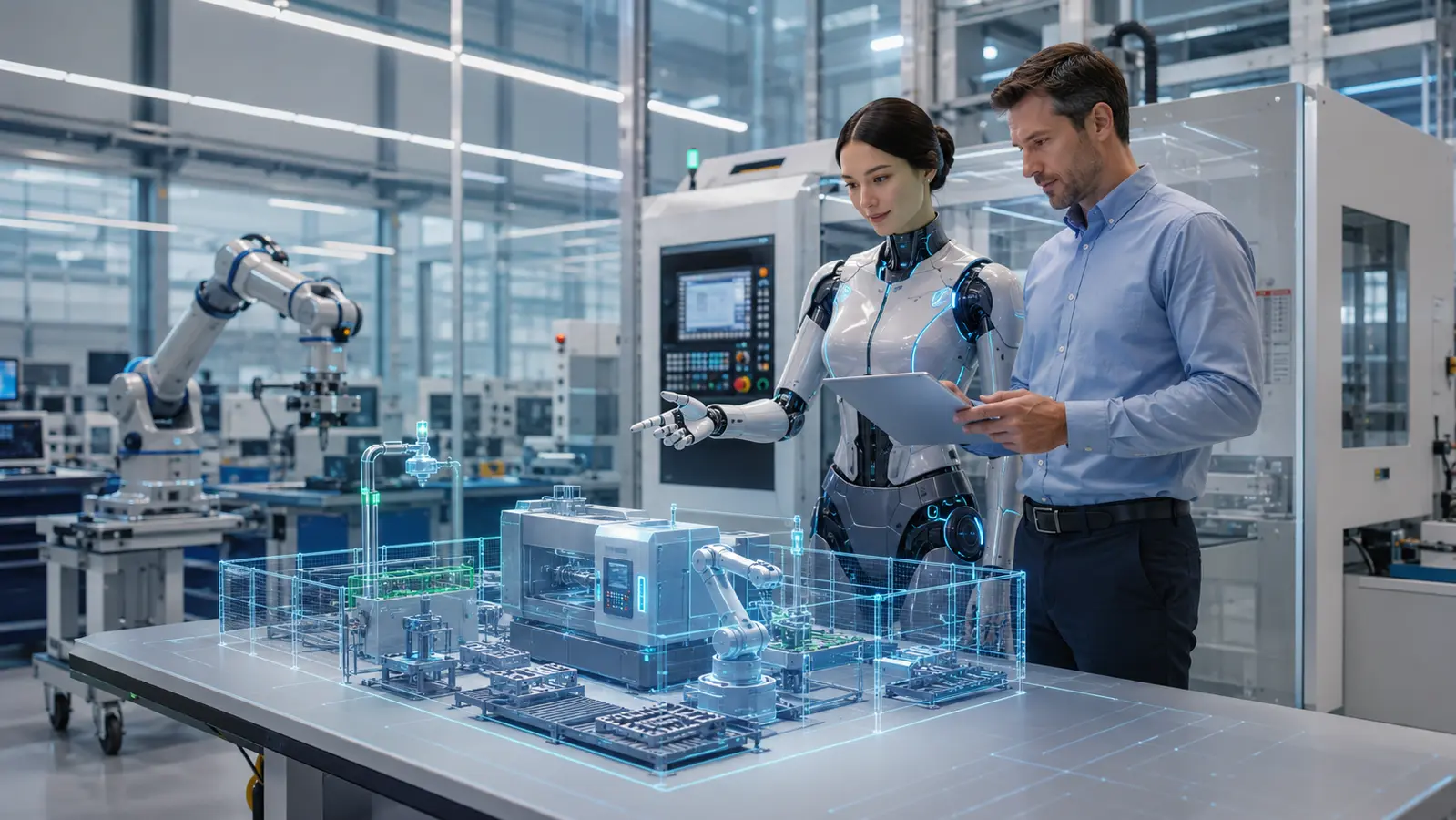
The digital model predicts. The physical system verifies. MetaCore closes the learning loop.
虚拟预测减少不良的物理试验,但只有真实结果才能显示模型是否可信。MetaCore 持续比较预测状态与测量状态,解释差异,并更新下一次决策。
LOOP
Fast candidate filtering without hardware wear.
Limited mode, sensor monitoring, and rollback.
Only verified experience becomes operational knowledge.
Experience no longer stays in one person's head. It becomes shared system competence.
MetaCore AI 专家监控试验,把信号与决策关联,并不仅保存结果,还保存其原因。只有经工程师验证的经验才进入生产记忆,并帮助另一台机器、另一个班次或另一个团队。
I understood why it happened."
CNC_04 振动因 8,420 rpm 共振而上升。已验证的安全替代值:7,860 rpm。
- WHEN
- Spindle 8.2–8.6k rpm
- 上下文
- Tool T12 · Al 6082
- PATTERN
- Resonance / chatter
- 恢复
- 7 860 rpm · feed −4%
The human shows the goal. MetaCore forms the skill. The robot performs the work.
我们不编写盲目的运动场景。MetaCore AI 专家把人类示范、相机视野、力、触觉与机械限制结合成可解释、可安全复现的工作技能。
the skill
- Intention identified
- Contact phases segmented
- Safe force envelope built
- Recovery strategy added
- Object and tool context
- Safe force profile
- Contact and slip events
- Recovery and human escalation limits
Vision tells you where the object is. Tactile sensing tells you what happens after contact.
人形手仅靠更好的电机无法变得实用。指尖与手掌触觉传感器必须在物体滑落或破损之前检测压力分布、微观滑移、形变与接触力。MetaCore 把这些信号与工作对象、风险及安全修正关联起来。
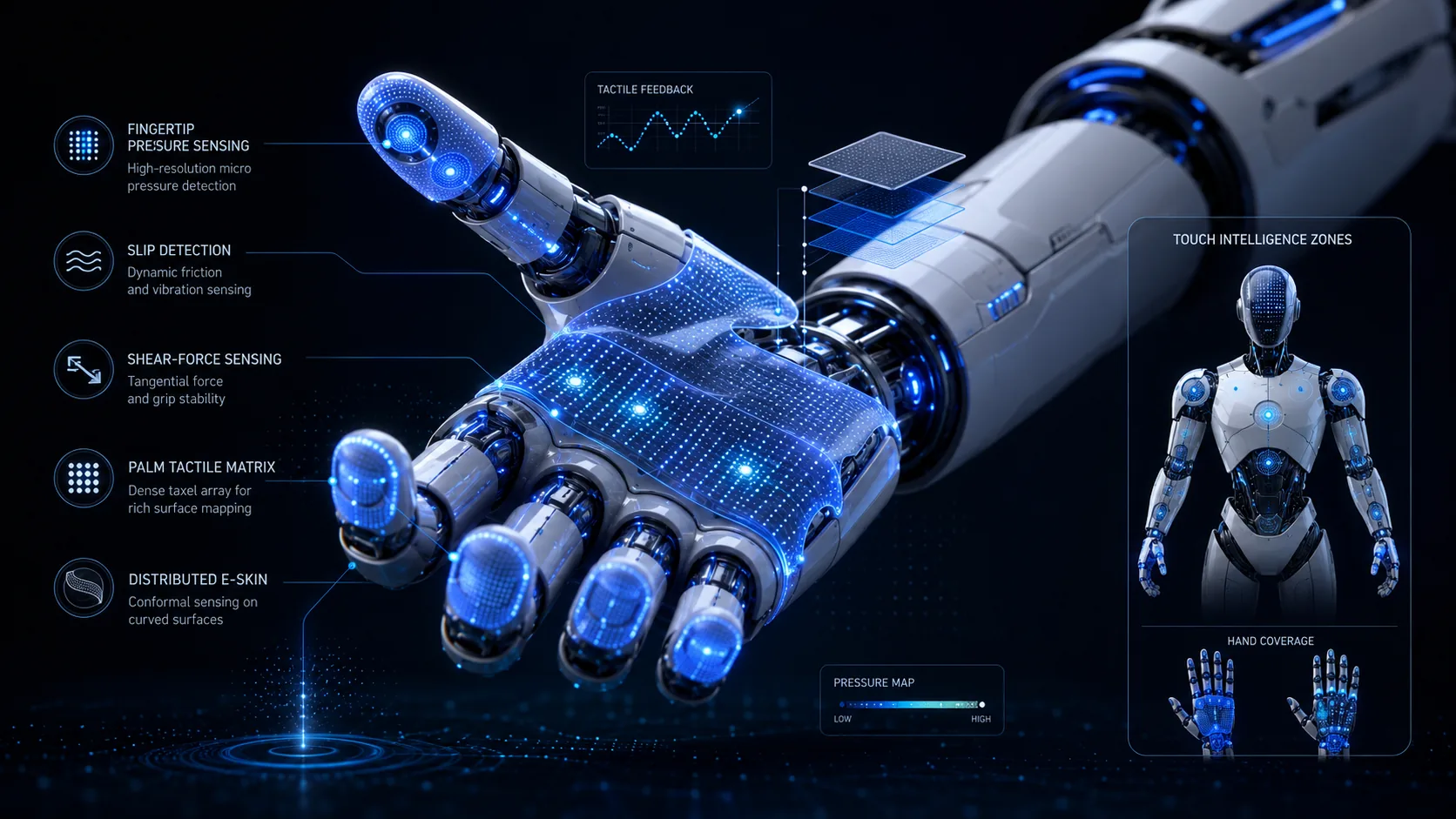
压力中心偏移 1.4 mm,切向力正在上升,而未检测到物体形变。降低手指力,并把支撑移向掌心。
Fingertip sensing
高分辨率指尖传感器捕捉接触、压力、纹理、局部力与早期滑移。
Tactile skin / e-skin
柔性传感表面覆盖手指、手掌与曲面机器人结构,使接触不限于单点可见。
Integrated tactile hands
手、传感器、信号融合与自适应抓取控制作为一个闭环操作体系运行。
Pressure, shear, proximity and temperature.
Noise filtering and a spatial contact map.
Slip, impact, deformation or stable-grasp class.
Object, material, tool and work goal.
Grip, speed, pose and force-envelope correction.
The outcome is validated and returned to the skill.
有用的手需要低延迟信号、空间压力图、滑移检测、形变边界与闭环抓取控制周期。
每一次触摸都成为可审计事件,每一次成功修正都成为已验证运行能力的候选。
The camera sees the object. The robotic arm touches it. MetaCore understands contact.
Real work begins where vision ends: the part slips, the joint resists, the surface deforms. The MetaCore AI Expert reads force, torque, and the tactile field as one physical event history — and helps the robot adjust action before failure occurs.
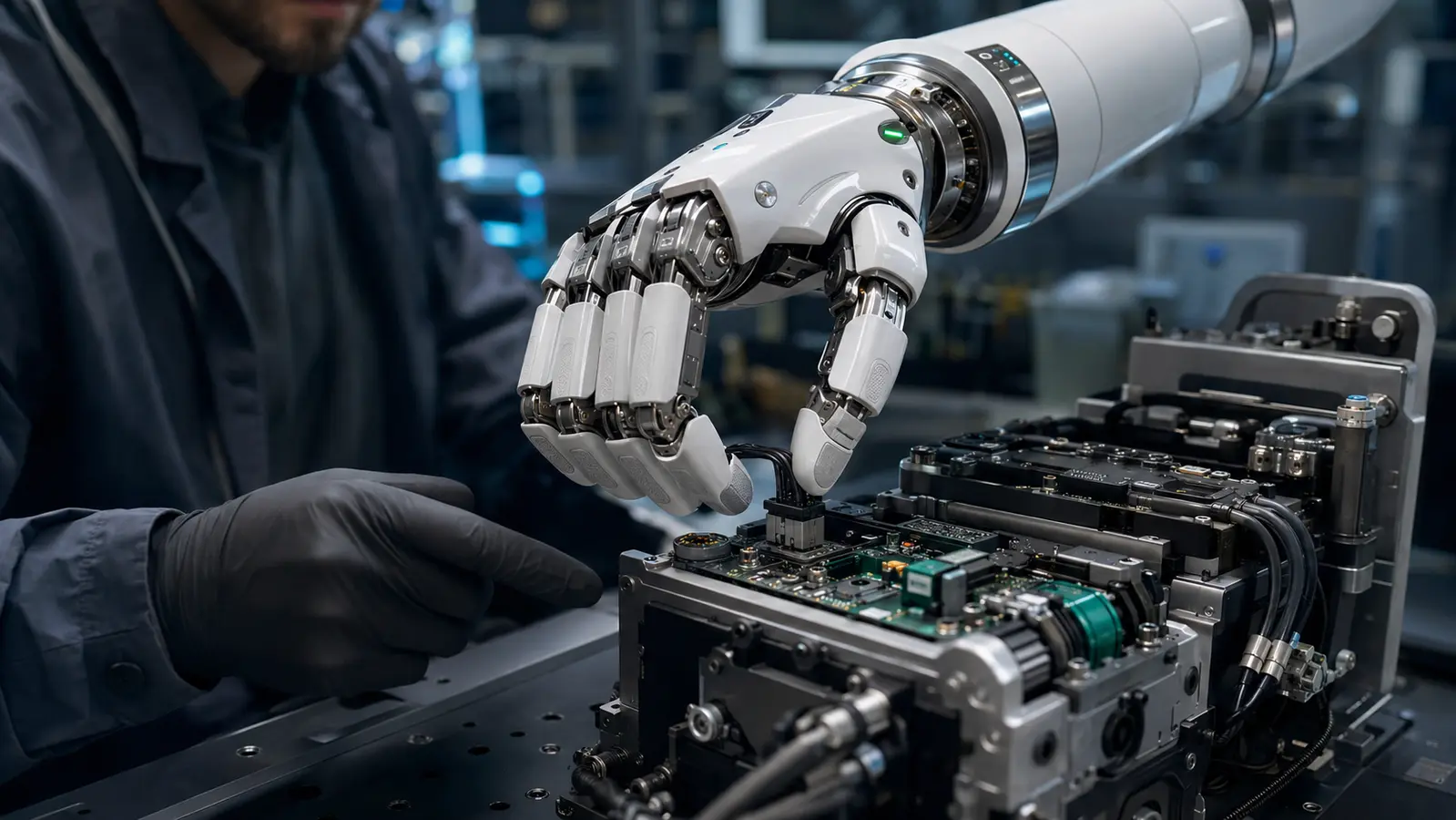
The system reduced speed, released force, and corrected the wrist without interrupting the task. This recovery profile was saved as a candidate for engineer approval.
Not just fingers. The full cycle from teleoperation to deployment.
A dexterous hand becomes valuable only when mechanical structure, drive transmission, tactile sensing, control, training, data collection, strategy training, and on-site deployment form one closed learning cycle.
Finger layout, DoF distribution, thumb opposition, wrist interface, and compact serviceable packaging.
Tendon rope, linkage, gear, modular actuator, or mixed route is chosen by task, weight, reliability, and cost.
Pressure, proximity, temperature, and slip signals turn contact into operational events.
Multi-finger synergy, force-position control, anti-slip correction and wrist-hand coordination.
Human demonstration links expert contact strategy with robotic action data.
Video, action, tactile, joint state, gripper state, and force profile are captured together.
Demonstrations and failures become skill candidates, simulation tests, and validation gates.
Only validated manipulation patterns move from training to real work with human approval.
Mechanical Structure
- Drive Transmission
- Tactile / Electronic Skin
- Control System
- Remote Operation / Teaching
- Multimodal Data Collection
- Simulation / Strategy Training
- On-site Deployment
- Operational Skill Memory
Hand as hardware
- How many fingers?
- How many DoF?
- What is the drive route?
- What speed and force?
Hand as an operational loop
- Which contact events are recognized?
- Which demonstrations became repeatedly used skills?
- Which failures improved the strategy?
- Which patterns are validated for deployment?
teleoperation_session:
  task: "insert_connector"
  robot_hand: "dexterous_hand_A"
  drive_route: "mixed_tendon_gear_modular"
  data_streams:
    - video
    - action_mapping
    - joint_state
    - gripper_state
    - tactile_pressure
    - slip_signal
    - force_profile
  contact_events:
    - stable_grip
    - micro_alignment
    - resistance_detected
    - successful_insertion
  metacore_outputs:
    - skill_candidate
    - failure_patterns
    - recommended_training_set
    - validation_required
    - deployment_gate
Small linear "muscles" decide precision robotic work.
Micro electric cylinders are compact linear actuation modules hidden in hands, wrists, small clamps, and fine-adjustment mechanisms. Through screws, nuts, guides, feedback, and limit protection they convert motor rotation into precise push-pull motion. In humanoids these small mechanisms often decide whether the robot can reliably reset, align, tension, or fine-adjust a task.
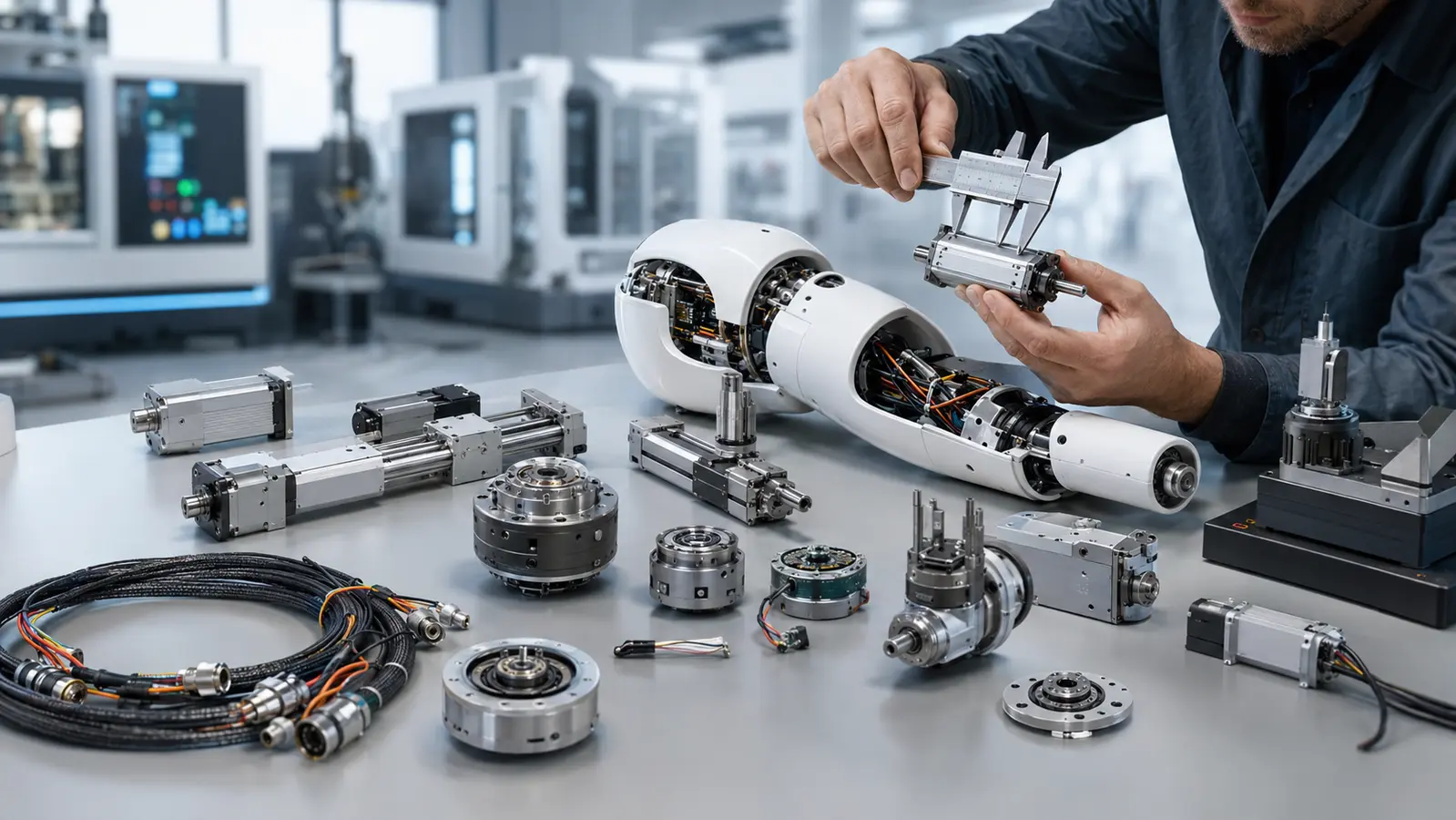
Short-stroke linear motion for ejection, reset, release, opening, and local correction.
Precise force and stroke control for grippers, fixtures, end-effectors, and tool-side mechanisms.
Reliable actuation for safety latches, mechanical limits, and quick-change interfaces.
A small linear correction can tune cable preload and finger transmission response.
Micro compensation for wrist tools, calibration, alignment, and precise local positioning.
Integrated sensors and limit protection turn a small push rod into a controlled system.
Component stack
- Motor and coupling
- Lead screw / ball screw and nut
- Push rod or sliding table
- Guide structure and bearings
- Encoder, feedback, and limit protection
- Housing and mounting references
Selection criteria
- Thrust and continuous load margin
- Stroke, speed, and response time
- Repeat positioning accuracy
- Backlash, friction, and noise
- Volume, weight, and wiring space
- Lifecycle, sealing, and lubrication
micro_linear_actuation_event:
  component: "micro_tension_adjuster"
  actuator_type: "micro_electric_cylinder"
  work_object: "precision_adjustment"
  monitored_state:
    stroke_position: "2.4mm"
    thrust: "within_limit"
    backlash: "increasing"
    noise: "normal"
    temperature: "stable"
    limit_switch: "not_triggered"
  metacore_output:
    - reduce_adjustment_speed
    - inspect_screw_and_nut
    - update_cycle_maintenance_rule
    - compare_supplier_batch
    - require_validation_before_deployment
A joint is where motion becomes measurable stress.
A humanoid is built around recurring joint actuator modules. Each joint is a compact mechatronic system: motor, transmission, sensors, bearings, housing, wiring, thermal path, and control board. MetaCore links actuator behavior to work context so load, overheating, backlash, encoder drift, and maintenance events become operational knowledge.
Force / torque feedback reveals load, contact, safety, and true joint response during work.
Harmonic reducer, planetary reducer, roller screw, and ball screw convert motor power into useful motion.
Frameless motors and hollow cup motors determine power density, inertia, response, weight, and miniaturization.
Heat, backlash, vibration, noise, current anomaly, encoder drift, impact events, and wiring fatigue become diagnostic signals.
Joint movement
↓
Sensor feedback
↓
Operational event
↓
Work context link
↓
Supplier / design insight
↓
Validated maintenance or redesign rule
Component BOM view
- Motor
- Reducer or screw
- Encoder / torque sensor
- Bearings, housing, wiring
MetaCore View
- In which task did load occur?
- Which motion causes a torque spike?
- After how many cycles does backlash grow?
- Which maintenance or design correction is validated?
joint_event:
  joint: "right_knee_actuator"
  work_object: "stair_climbing_test"
  event_type: "torque_spike"
  sensor_state:
    torque: "above_expected"
    temperature: "rising"
    encoder: "micro_drift_detected"
    vibration: "increased"
  interpretation:
    likely_cause: "load concentration during step transition"
    confidence: 0.78
  knowledge_output:
    - reduce_acceleration_profile
    - inspect_reducer_backlash
    - update_maintenance_interval
    - send_supplier_feedback
Small materials decide long-term robotic reliability.
PEEK is not a cheap metal substitute. It is a high-quality engineering polymer used selectively in small robotic components where lightweighting, wear resistance, low noise, dimensional stability, and electrical insulation matter more than pure load-bearing strength. In humanoids these small material choices directly affect actuator load, arm inertia, cable life, noise, heat, maintenance cycles, and field reliability.
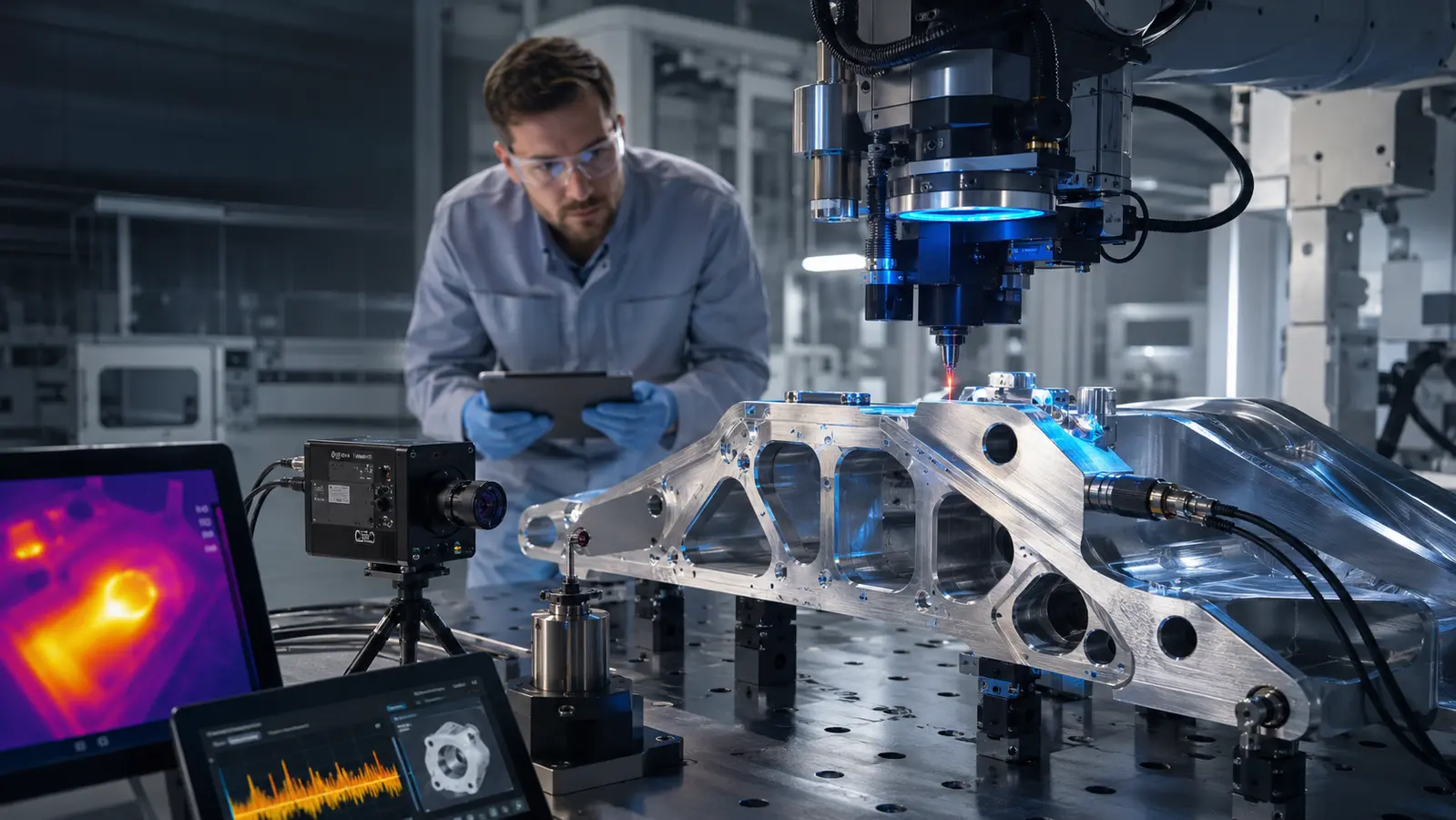
Reducing grams in fingers, wrists, guides, and small internal parts lowers inertia, torque demand, and battery load.
PEEK can be used in bushings, sleeves, guides, small gears, and sliding interfaces where friction cycles accumulate.
Local friction pairs and small transmission parts can run quieter than metal-on-metal contact when designed correctly.
Sensor mounts, controller supports, cable fixings, and motor-side brackets need mechanical support and electrical isolation.
Stable clearances matter in miniature joints, cable routing, encoder areas, and repetitive assembly workflows.
PEEK still requires lifecycle validation after preload, heat, vibration, and alternating loads before mass production.
PEEK use cases in humanoids:
- finger joints and tendon guides
- small internal gears and pulleys
- bushings / shaft sleeves / spacers
- wrist and hand cable routing parts
- bearing cages and low-load sliding parts
- sensor brackets and connector housings
- motor / controller insulating supports
- wire harness fixation and protection
Metal where strength dominates
- Primary load-bearing frames
- Hip / knee / ankle impact paths
- Primary pulleys and heavy transmission cores
- High-stiffness structural joints
PEEK where behavior matters
- Low-friction miniature components
- Quiet arm and wrist transmission parts
- Electrical insulation near sensors and controllers
- Stable guides, sleeves, and cable protection
material_operational_event:
  component: "finger_tendon_guide"
  material: "PEEK"
  robot_area: "dexterous_hand"
  expected_value:
    - lightweight
    - low_friction
    - low_noise
    - dimensional_stability
  monitored_events:
    - wear_growth
    - noise_increase
    - clearance_drift
    - cable_friction
    - temperature_rise
    - creep_deformation
  metacore_outputs:
    - inspect_after_cycles
    - maintenance_rule
    - supplier_feedback
    - redesign_material_candidate
    - lifecycle_validation_gate
From precision manufacturing to operational intelligence.
A humanoid robot is not one product. It is a system of hundreds of mechanical, electronic, sensor, energy, and compute components. Precision manufacturing creates the body, the robotics stack executes motion, and MetaCore turns physical execution into operational knowledge.
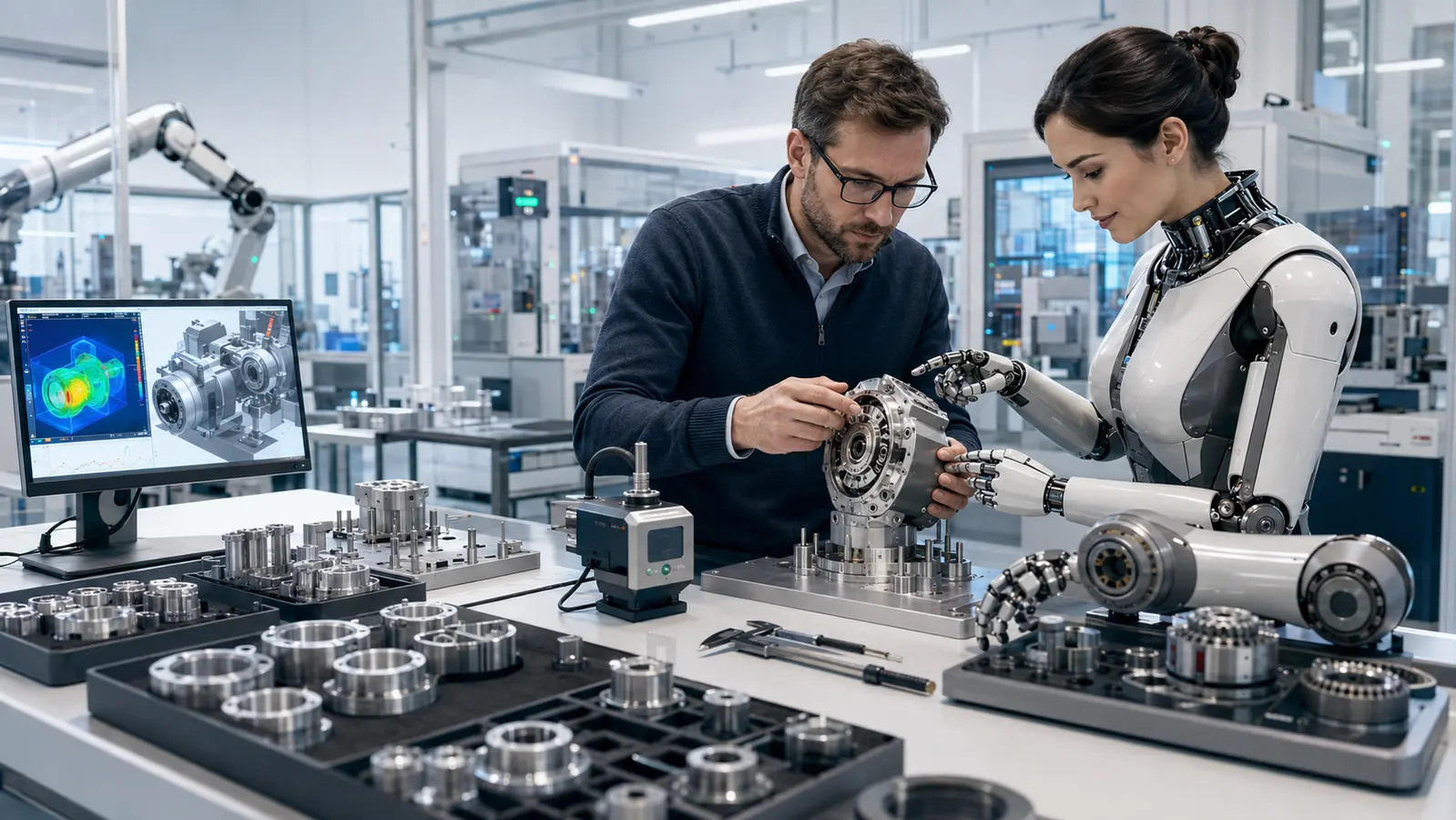
Joint housings, flanges, brackets, bearing seats, actuator covers, and precision interfaces.
Cross-roller bearings, thin-section bearings, harmonic drives, planetary reducers, and backlash control.
PCB, SMT, BMS, motor control boards, signal routing, flexible harnesses, and EMI resistance.
Component behavior in real work: overheating, vibration, torque spike, encoder drift, cable fatigue.
Supply Chain builds components
↓
Robot Stack executes motion
↓
Operational Events capture field behavior
↓
MetaCore links component behavior with work context
↓
Validated knowledge improves design, maintenance and fleet operation
Manufacturing view
- Who manufactured the part?
- What material and process?
- What are the tolerances?
- What is the test result?
MetaCore View
- In which work did the part experience load?
- Which operational event recurred?
- Which skill or motion did it affect?
- Which correction to validate for the fleet?
component_object:
  part: "knee joint housing"
  process: "CNC + anodizing"
  linked_skills:
    - walking
    - stair_climbing
    - kneeling
  operational_events:
    - torque_spike
    - overheating
    - vibration_growth
    - encoder_drift
  knowledge_output:
    - maintenance_rule
    - design_revision
    - supplier_feedback
    - fleet_update_after_validation
MetaCore controls not one drone, but groups, categories, and mission context.
MetaCore Robotics is not a military product and is not intended for strike systems. In a civil environment it can act as an AI operator above drone, robot, and sensor networks: for inspection, territory maintenance, rescue coordination, agriculture, infrastructure monitoring, and environmental data collection.
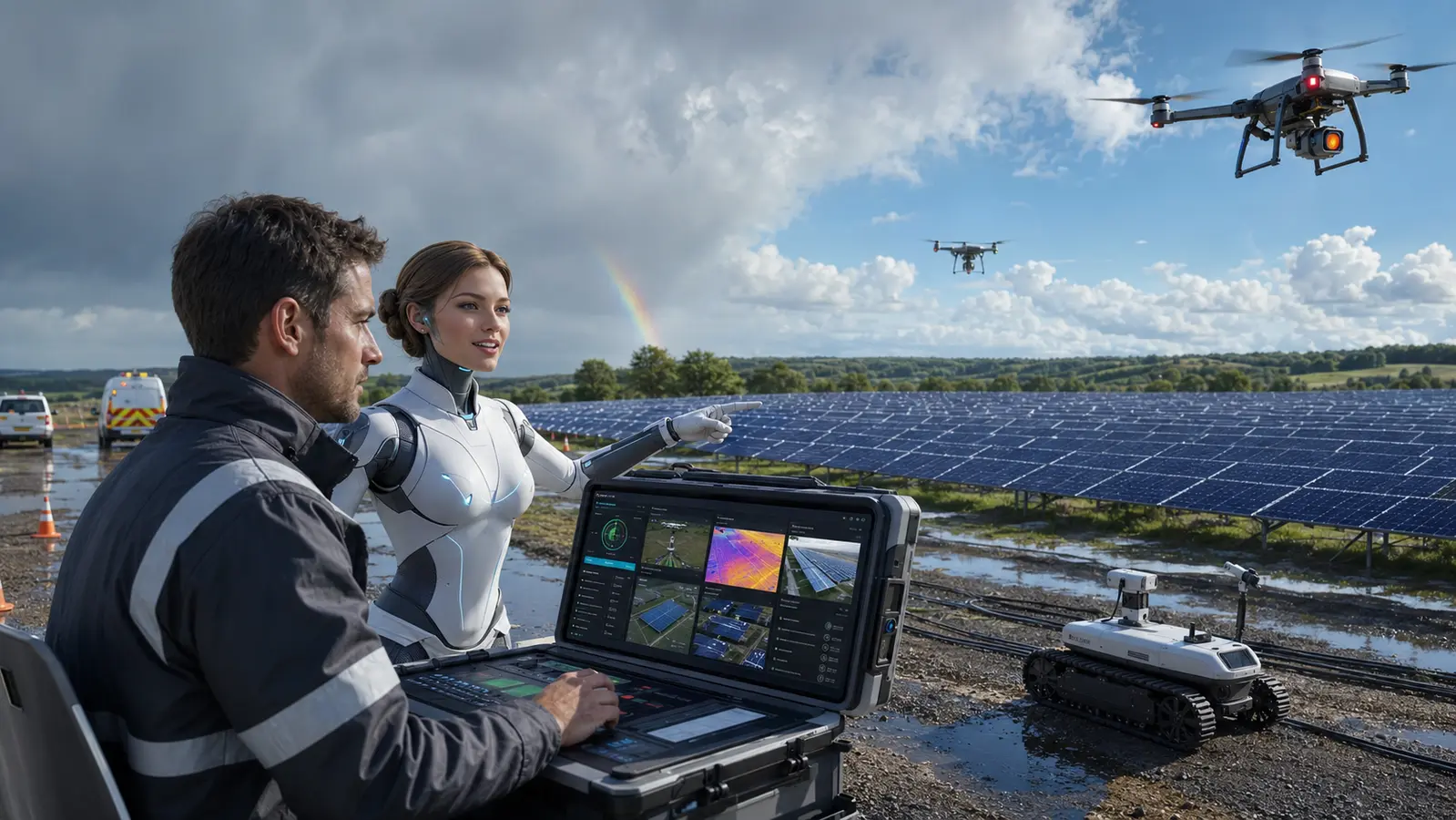
Drones are grouped by role: visual inspection, thermal monitoring, mapping, relay, backup agent.
Not every agent gets the same task. MetaCore assigns work by zone, risk, priority, and permission.
Not raw data is recorded, but events: link loss, battery drop, obstacle, route deviation, human handoff.
The MetaCore AI operator helps the human see group state, recommend action, and prepare a decision for approval.
Civilian Mission
↓
Drone / Robot Groups
↓
Role Categories
↓
Communication Policy
↓
Operational State
↓
MetaCore AI Operator
↓
Authorized Approval / Handoff
↓
Validated Operational Knowledge
Without MetaCore
- Each drone is monitored separately.
- The operator drowns in cameras, telemetry, and alerts.
- Events often remain in separate logs.
- Experience is hard to transfer to the next mission.
With MetaCore
- Agents are managed by groups and categories.
- The operator sees overall operational state.
- Events are classified and linked to mission context.
- Validated knowledge returns to the next operation.
network_object:
  mission: "Inspect solar park after storm"
  agent_groups:
    visual_scan: [drone_01, drone_02]
    thermal_check: [drone_03]
    relay_support: [drone_04]
    standby: [drone_05]
  categories:
    - infrastructure_inspection
    - safety_monitoring
    - anomaly_detection
    - operator_handoff
  operational_events:
    - route_blocked
    - weak_signal
    - battery_low
    - thermal_anomaly
    - human_review_required
  human_policy:
    approve_route_change: true
    approve_high_risk_area: true
    final_decision: "human"
A humanoid demo proves capability. A validated supply chain proves readiness.
One humanoid is not just a robot, but an industrial system: actuators, transmissions, arms, sensors, controllers, batteries, structure, harnesses, test equipment, and service processes. When the demo phase ends, the real question is not whether the robot moves, but whether the same quality can be repeated in series, maintained in the field, and validated through real operational events.
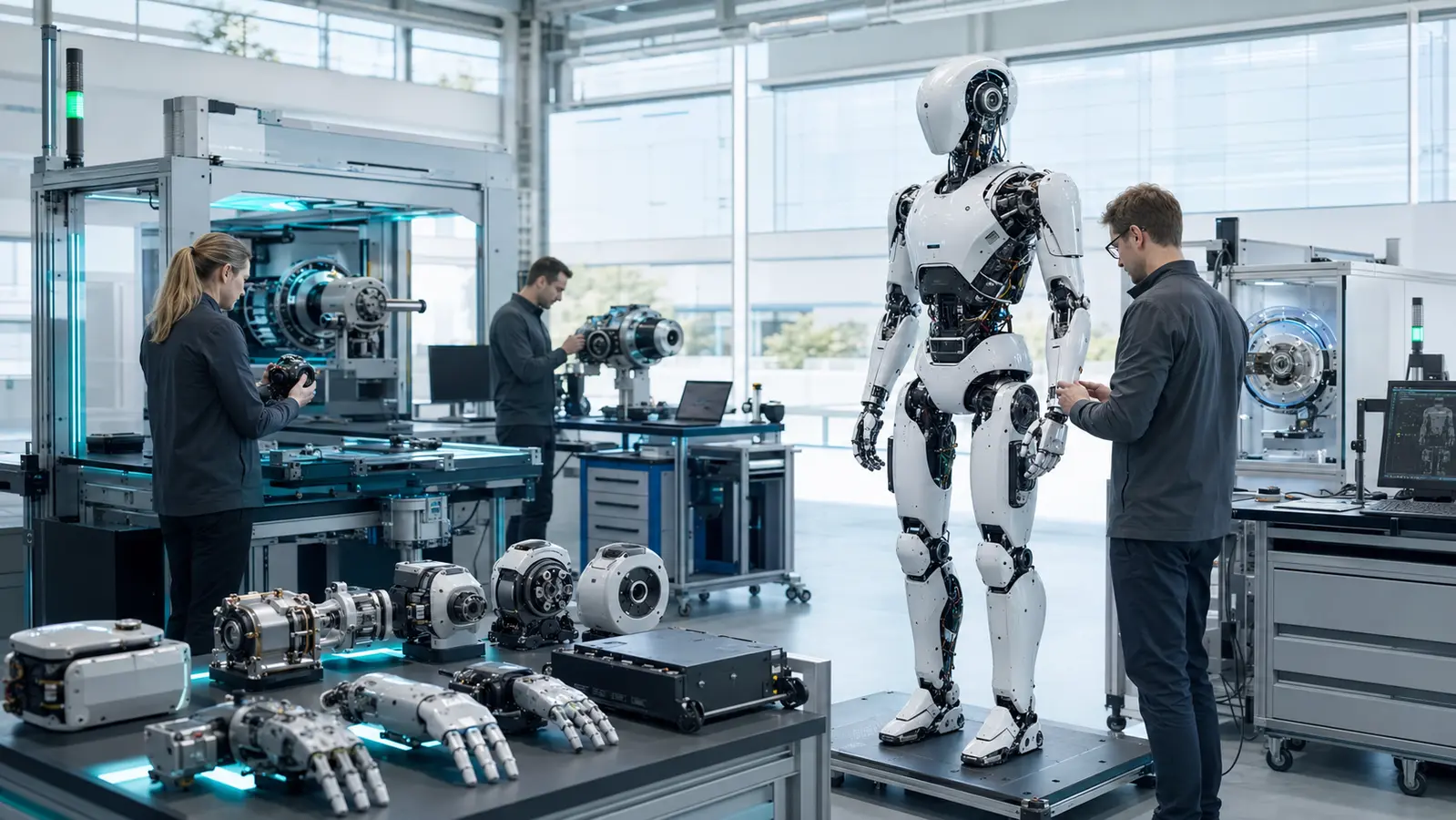
Clear version, material, measurement method, and test criteria.
Sample quality, delivery discipline, traceability, and a repeatable process.
Temperature, clearance, noise, load, and failure pattern.
Clear maintenance rules, rollback path, and responsible authorization.
Manual tuning, small quantity, engineering debugging, fast iterations, and not yet proven service lifecycle.
Identical parts, stable cycles, repeatable quality, calibration jigs, aging tests, and assembly discipline.
Not a catalog line, but sample verification, lifespan data, delivery records, contract status, and field failure history.
After how many cycles to inspect, what to replace, where real risk rises, and how field data returns to design.
Component Portfolio
↓
Qualified Supplier Pool
↓
Sample Verification
↓
Small Batch Delivery
↓
Lifecycle Testing
↓
Operational Events
↓
Mass Production Decision
↓
Maintenance & Redesign Knowledge
Market map view
- The company has a suitable product.
- The company appears on the supply chain diagram.
- There is technical capability.
- There is not yet proven mass supply.
Validated supply-chain view
- Sample passed tests.
- There is a small-series delivery record.
- Field events show stable lifecycle.
- Service and redesign rules validated.
supplier_validation_event:
  component: "knee actuator reducer"
  supplier_status: "qualified_pool"
  robot_model: "humanoid_prototype_A"
  test_context: "stair_climbing_5000_cycles"
  events:
    - temperature_rise
    - backlash_growth
    - abnormal_noise
  outcome:
    reliability_score: 0.74
    mass_production_ready: false
    required_action: "extended_lifecycle_test"
  metacore_output:
    - supplier_feedback
    - maintenance_rule
    - redesign_candidate
    - next_validation_gate
Not separate images. One Operational Coherence chain.
MetaCore LAB connects operator decisions, robotic action, actuator state, component validation and humanoid reliability into one understandable system.

MetaCore designs unique robotics, automation and Physical AI systems around real work.
Each project is shaped around a specific task, existing mechanics, electrical engineering, controllers, robotics stack, sensors, data flows, safety boundaries and the point of human decision. We do not sell abstract “AI for robots”—we design a coherent system from the physical component to validated work and operational memory.
Mechanics and mechatronics
Structure, joints, actuators, reducers, linear drives, end effectors, tools, tolerances and serviceability.
Electrical engineering and automation
Power, protection circuits, PLC, servo drives, VFD, I/O, sensors, SCADA and deterministic control.
Robotics and networking
ROS2, NVIDIA Isaac, MoveIt, vendor SDKs, edge compute, OPC UA, MQTT, time synchronization and secure network zones.
MetaCore Operational Coherence
Work Semantics, Work Objects, Execution Intelligence, Operational Events, Knowledge Loop and scoped-authority rules.
Do you have a robotics, CNC, automation or multi-device project?
Send an inquiry—we will help design a unique system, connect your existing equipment and prepare a safe path from pilot to validated deployment.
Bring us your robot. Add the Field. Measure the DELTA.
You already have the robot, mechanics, electronics and control logic. For the pilot we select one real task, record the BEFORE baseline, connect MetaCore Field through an allowed SDK/API/telemetry surface, and repeat the same task within the same safety boundaries. We evaluate a measurable DELTA—not a promise.
Your robot as it is today
We record current teaching time, success rate, retries, intervention, recovery, telemetry and engineering tuning effort. Nothing is judged by marketing claims—only by the selected real task.
The same robot with MetaCore Field
We measure whether the robot preserves task context better, detects deviations, reuses validated experience, hands problems to people more clearly and requires less repeated tuning.
One robot. One engineer. One real task.
Humanoids, cobots, manipulators, AMRs, inspection robots, CNC and other Physical AI systems. We begin with read-only evidence, then—only when justified—move to bounded integration and measure the DELTA.
You build the machine and its logic. MetaCore adds Digital Heart.
For manufacturers, MetaCore is not a replacement for the motion stack. Digital Heart is an Coherence Operating Layer for the robot: persistent task context, operational memory, evidence-linked reflection, failure/recovery knowledge and scoped authority above existing OEM control.
Manufacturer and integrator technology executes physical action.
Policy, mandate and scope define which role sets goals, boundaries, business logic and approves significant decisions.
| 能力 | Robotics Stack | MetaCore |
|---|---|---|
| Motion planning / IK / trajectory | ✓ | — |
| Motor control / firmware | ✓ | — |
| 工作语义 | — | ✓ |
| Work Object / Operational Memory | limited | ✓ |
| Execution Intelligence | partial | ✓ contextual |
| 运行事件 | logs | ✓ interpreted |
| Fleet-level validated knowledge | limited | ✓ after approval |
| Human handoff / audit trail | varies | ✓ |
You have real work. MetaCore gives it structure.
The AI MetaCore Expert is not a general chatbot. It becomes a friendly assistant for your engineers and operators: understands work context, connects devices, explains the situation, and grows reliable operational memory.
Do you have a workshop, an electronics lab, or a few devices?
MetaCore helps assemble processes into a clear system. Your team gets an AI Expert that knows work context, helps solve problems, and creates order without unnecessary bureaucracy.
Do you run production with a lot of equipment?
MetaCore connects machines, signals, documentation, and people into one controllable network. You see the big picture, and when needed can drill down to a specific device, cycle, or risk moment.
Do you manage complex logistics across multiple sites?
The AI MetaCore Expert can work with each team at their workplace while maintaining shared control, knowledge, and accountability structure across the network.
Devices, people, data flows, decision points, and existing signals on one work map.
Where human approval is required, what can be automated, and which events must become learning material.
One real process, clear measurement criteria, and a safe path from pilot to repeatable skill.
Authorized roles set goals, limits and priorities under policy, mandate and scope; risky patterns follow defined approval gates.
Skills are not published to the fleet without verification and a clear rollback path.
Every significant execution event must be explainable, traceable, and usable for learning.