

You built the robot.We bring the Field.
Coherence Operating Layer for Physical AIHardware provides the body. AI provides capabilities. MetaCore provides continuity. Context, interaction history, recovery, evidence and scoped authority remain meaningful across time — above the existing robotics stack.
The robot already has a body and logic. MetaCore adds operational coherence.
MetaCore is not another robot brain or controller. It is a layer above the existing stack that preserves shared state across people, AI, engineering and machines—so context, decisions, evidence and validated experience do not disappear after every task.
Mechanics, electronics, sensors, actuators and the physical robotics body.
Firmware, ROS2, PLC, motion planning, VLA/models and deterministic execution.
Context, memory, reflection, evidence, human intent, authority and engineering knowledge in one continuous state.
MetaCore Engineer + Workteam
Project context, Master AI coordination, requirements, CAD/BOM, suppliers, tests, measurements, decision history, handoffs and validated engineering knowledge.
WORKTEAM · MASTER AI · ENGINEERING MEMORYMetaCore Robot Runtime
Work Semantics, Work Object, Operational Events, Skill Intelligence, recovery, human handoff, health history and validated operational memory above the existing robotics stack.
CONTEXT · SKILLS · EVENTS · MEMORYMetaCore Corporate Context
Teams, projects, factories, robot fleets, CNC, PLC, suppliers and organizational rules become one contextual model with explicit authority and an audit structure.
MULTI-SITE · FLEET · GOVERNANCE · EVIDENCEFrom a standalone device to one living production system.
A hub for engineers, electrical specialists, mechanics, and automation teams. We connect physical equipment with control, context, and operator decision-making — without replacing what already works reliably.
Robotics
Humanoids, manipulators, cobots, mobile robots, machine vision, and safe motion execution.
ROS2 · Isaac · MoveIt · Vendor SDKCNC and manufacturing
Machine tools, G-code, tooling, workpieces, quality control, and experience feedback into the production cycle.
CNC · CAM · G-CODE · QAElectrical engineering
PLC, servo drives, frequency converters, I/O, energy monitoring, and diagnostic signals.
PLC · SERVO · VFD · MODBUSMechanics
Actuators, reducers, forces, tolerances, vibration, temperature, and component lifecycle.
ACTUATION · FORCE · TOLERANCESmart control
Sensor synthesis, digital twins, recipes, states, and adaptive process control.
OPC UA · MQTT · DIGITAL TWINSystem integration
Equipment from different manufacturers receives a shared work object, event language, and auditable history.
EDGE · API · EVENTS · KNOWLEDGEDifferent robots. One company memory.
MetaCore Field maintains one governed shared state across projects, engineers, the AI Workteam and different robots. Each machine receives only the context it needs, while its events return to the company operational memory.
Coordinates; never overrides people
Distributes work across specialist AI roles, preserves shared project context, consolidates the result and hands a decision package to the responsible engineer or manager.
Mechanics + robotics + electrical + QA
Disciplines work in the same project context, reducing knowledge loss across people, shifts, revisions, suppliers and validation stages.
Human-aware, not “a human in a machine”
MetaCore helps the robot better understand human intent, work conditions, boundaries, uncertainty and the moment when it must stop or ask a person.
From an executing machine to a continuous, context-aware partner.
Digital Heart is not an imitation of emotion. It is MetaCore Field implemented for a robot: continuous relationship and work context, operational memory, evidence-linked reflection, human boundaries and validated engineering experience.
A machine that does not start from zero.
The model may change. The robot may change. But Work Objects, decision history, recovery experience and human-defined boundaries must persist.
A person no longer sends the whole world. They send the change.
Stateful Intent Compression interprets human language as ΔIntent against persistent shared operational context. The system reconstructs the relevant state only when that state is sufficiently reliable.
An AI expert beside the human. The human leads.
Operator Layer does not push the human out of the process. It collects machine states, explains risk, provides decision context, and stops execution where engineer approval is required.
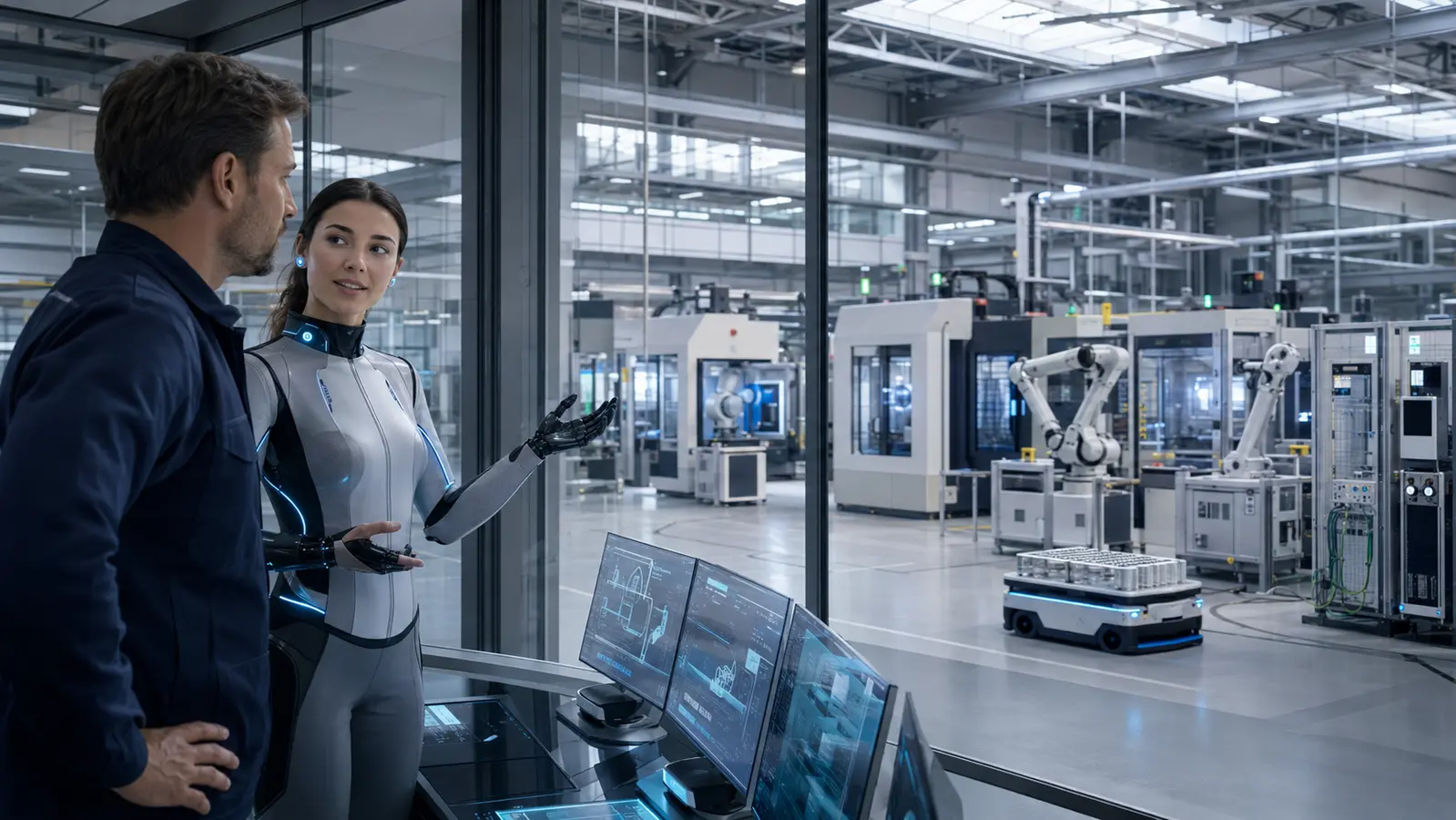

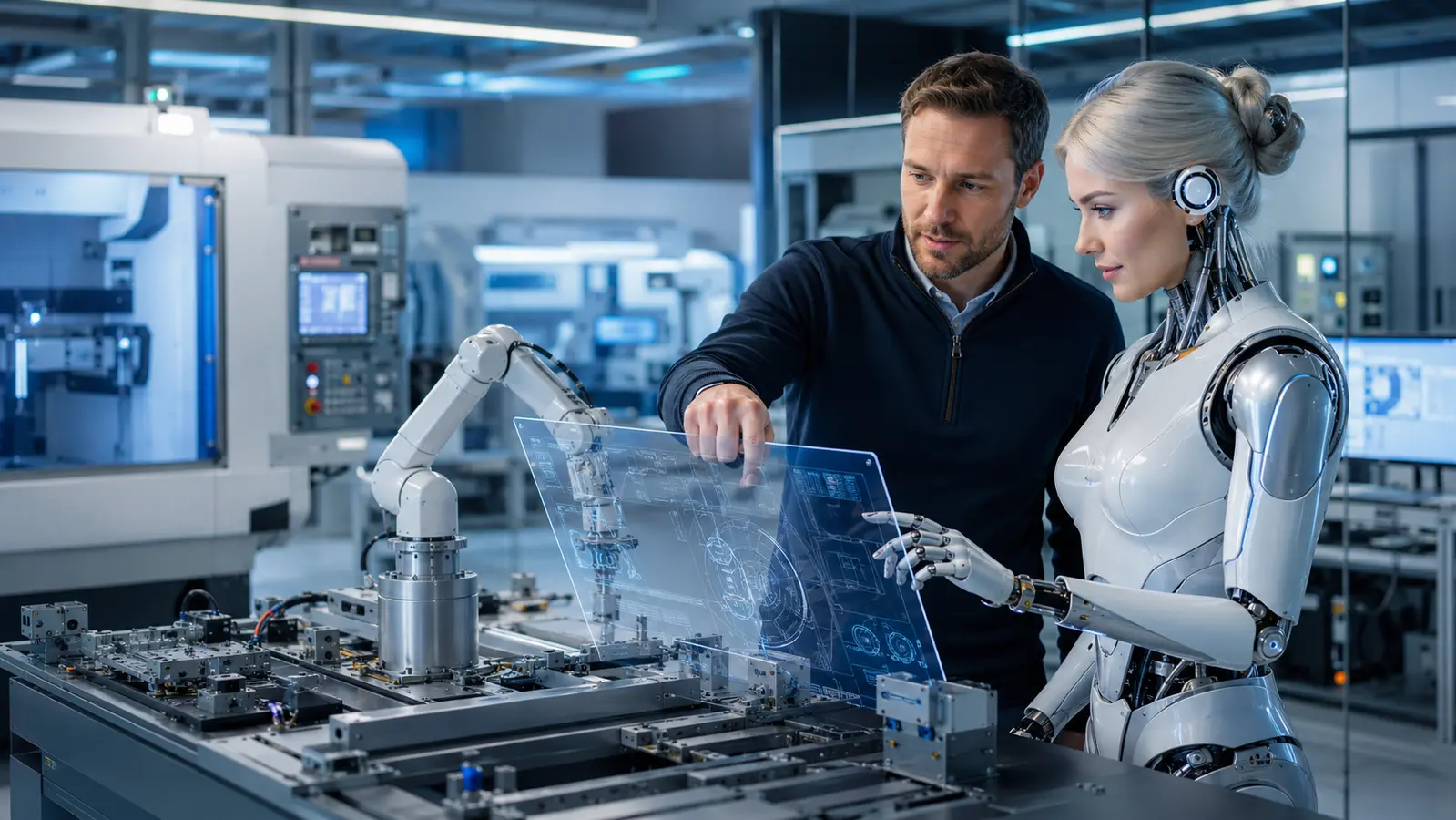
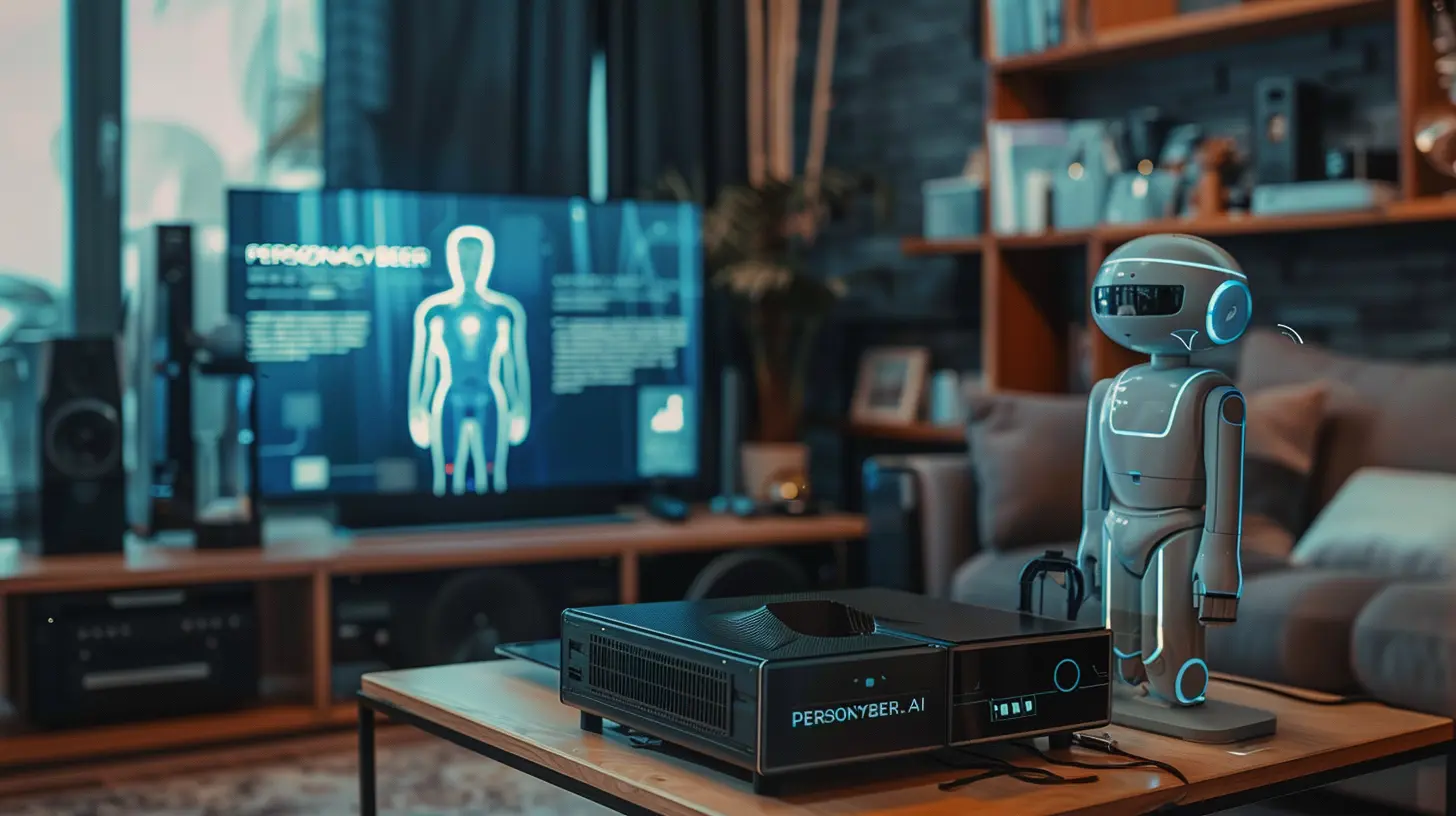 ONE EXPERT · MANY SYSTEMS
The human does not need to talk to ten different bots.
They communicate with one familiar MetaCore expert. The expert knows context, selects the right device or software agent, coordinates action, and returns a clear result to the human.
Devices already know how to execute. The system needs to understand the work.
Control stacks solve trajectories, servo cycles, PLC logic, motor operation, and simulation. MetaCore stands above execution: it governs work semantics, risk, trial history, human approval, and knowledge feedback into the system.
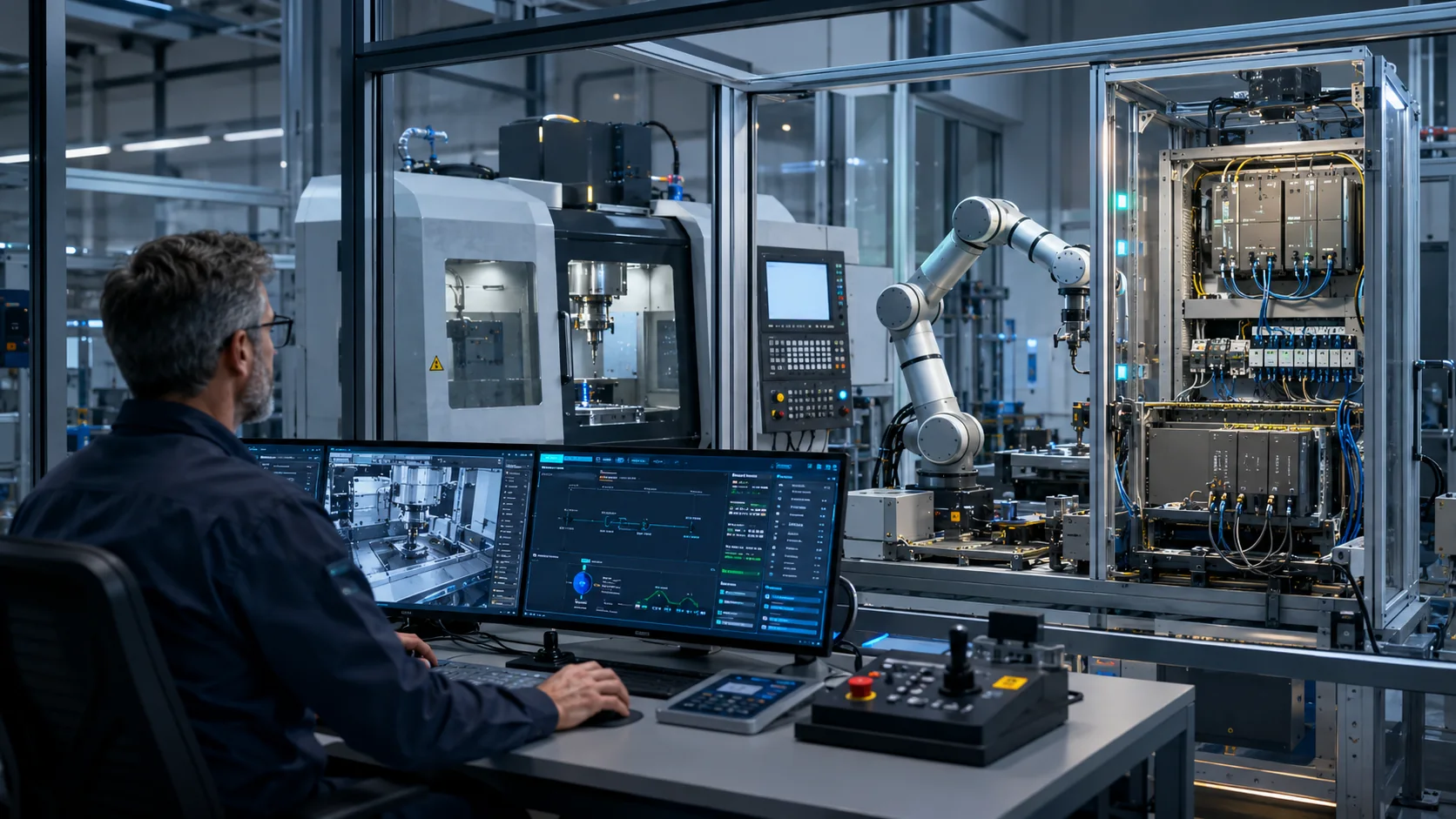
One operator. Full production state.
MetaCore connects CNC, robot, PLC, sensors, and process history into one explainable decision field.
Scripted execution
- No shared skill memory
- Errors are poorly explained
- A new object means new tuning
- Experience scatters across robots and operators
Operational intelligence
- Work has context
- Klaidos klasifikuojamos
- The human receives a clear handoff
- Knowledge is versioned and validated
A device is not enough with a command. The system needs to understand what the work means.
CNC, a robot, or a PLC can execute a program precisely. MetaCore adds purpose, object state, risk, prior trial history, and a clear handoff rule for the operator.
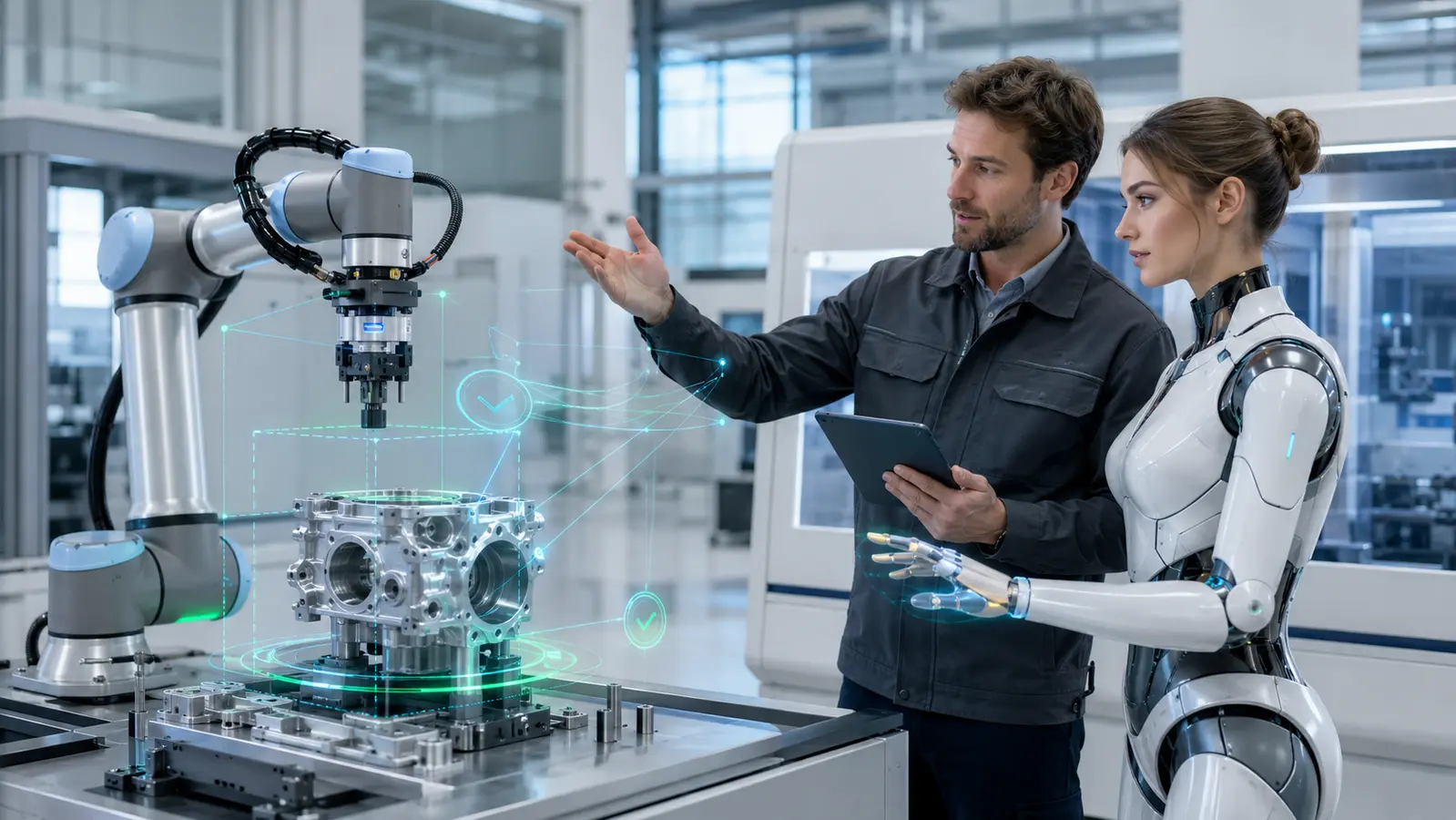
Why the operation is needed and where it fits in the overall production flow.
Limits for the human, part, tool, gear, and process.
What was tried, under what conditions, with what parameters and outcome.
When to stop automatically and what decision package to pass to the engineer.
A thought is not a direct motor command. It becomes a safely interpreted intent.
Non-invasive EEG can detect a limited, pre-trained set of human intents. MetaCore never lets a neural signal control actuators directly: it converts detected intent into a Work Object, checks context, risk and permissions, and only then sends a bounded task to the robotics execution layer.
Non-invasive EEG captures features of electrical activity.
Artifacts are filtered and stable features are extracted.
A limited set of trained intents is classified.
Intent is linked to the object, environment and risk.
Autonomy boundaries and the policy-defined authorization / approval gate are checked.
ROS2, PLC or a vendor SDK executes the physical action.
Practical systems usually recognize a limited set of intents or commands, while trajectory and stabilization are handled by robot control software.
Latency, classification accuracy, individual calibration, fatigue, false activation and safety policy must be verified through independent testing.
MetaCore connects above automation — without breaking or replacing it.
PLC, CNC controller, ROS2, or manufacturer SDK remain responsible for deterministic control. The MetaCore AI Expert does not replace them — it converts state into an understandable engineering decision, links context, and leaves decision authority with the role authorized by policy and scope.
An integrative layer, not an invasive one
We start from real signals, work history, and operational events. MetaCore explains what is happening, what is worth doing, and what the risk is — while controlled action appears only with clear limits, approval, and a rollback path.
Not just a program or a skill. A complete work contract.
A Work Object is not a command to the machine. It is a clear work contract: what to achieve, what we work with, which limits must not be crossed, when the AI Expert must stop, and what we must prove after completion.
mission: machine bearing housing
machine: CNC_5AXIS_04
part: housing_AL6082_batch_27
tool: endmill_D10_T17
constraints:
  spindle_load_max: 82%
  vibration_rms_max: 2.8 mm/s
  dimensional_tolerance: ±0.03 mm
recovery:
  pause_feed → inspect_tool → operator_review
human_intent:
  precise housing, no hidden compromises
expected_result:
  surface_Ra ≤ 1.6 μm
  dimensions_validated: true
  decision_trace: complete
Not yet another command to the device. An engineering-grounded decision.
The MetaCore AI Expert combines controller state, process signals, part requirements, and prior cycle experience. The engineer receives not an alarm, but an explained decision package.
Vibration increase correlates with T17 tool load, not workpiece clamping. The process is still safe, but the current mode increases surface defect risk.
Reads device and process state.
Separates symptom from cause.
Proposes action, limits, and outcome.
The human approves or stops.
Verifies result and saves experience.
Sensors deliver signals. MetaCore understands the situation.
One measurement can lie, lag, or show only part of the problem. The MetaCore AI Expert aligns independent sources, assesses their reliability, and converts telemetry into an engineering conclusion.
Four independent channels confirm the same cause. Temperature and force direction rule out gear overheating and loose clamping.
Conclusion supported by alignment of multiple independent sources.
The engineer sees which data drove the diagnosis.
State is linked to cause, risk, and next action.
The humanoid does not just move. Every moment it recalculates whole-body balance.
When the robot steps, lifts a part, or extends an arm, the center of mass, contact forces, and available torque reserve change. Low-level MPC, WBC, or a policy controller stabilizes the body; MetaCore understands what that motion means for the task and risk.
Arm extension shifts CoM toward the support edge. Reducing reach speed by 18% keeps stability margin above 70%, with no change to the part pickup trajectory.
Closes current, speed, and position loops.
Distributes moments, contact forces, and trajectory.
Links motion to work, risk, history, and human policy.
Sets goal, work limits, and approval rules.
Before acting in reality, MetaCore verifies several possible futures.
The world model combines object position, geometry, contacts, human proximity, robot state, and task goal. Candidate actions are evaluated first in the internal model — only then is the safest and most useful path chosen.
Sensoriniai signalai
World state
Possible consequences
The safest action
Experience from real outcomes
The digital model predicts. The physical system verifies. MetaCore closes the learning loop.
Virtual prediction reduces bad physical trials, but only real outcome shows whether the model can be trusted. MetaCore continuously compares predicted and measured state, explains the difference, and updates the next decision.
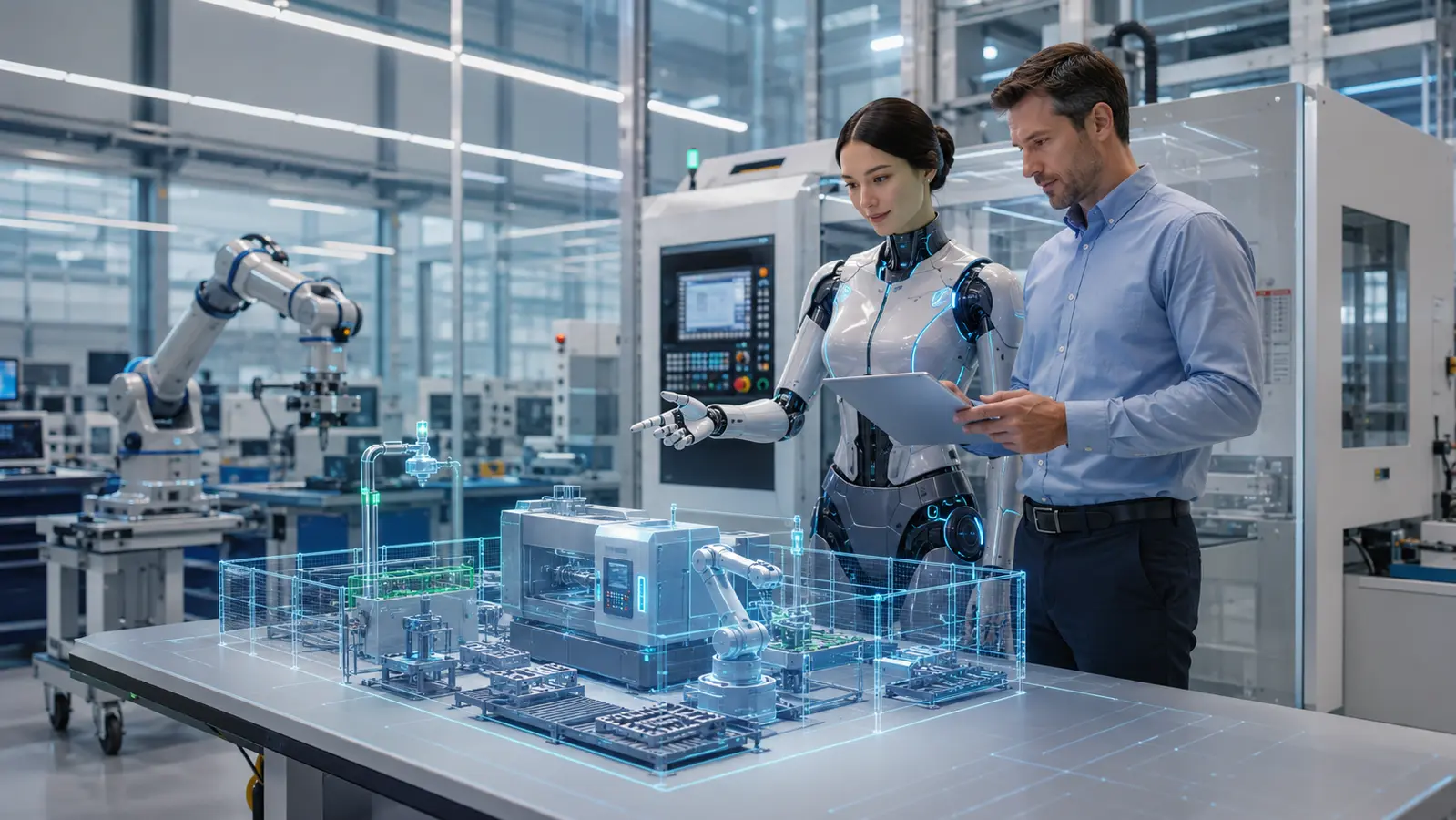
LOOP
Fast candidate filtering without hardware wear.
Limited mode, sensor monitoring, and rollback.
Only verified experience becomes operational knowledge.
Experience no longer stays in one person's head. It becomes shared system competence.
The MetaCore AI Expert monitors the trial, links signals to the decision, and saves not just the result, but its cause. Only engineer-validated experience enters production memory and can help another machine, shift, or team.
I understood why it happened."
CNC_04 vibration rose due to resonance at 8,420 rpm. Verified safe alternative: 7,860 rpm.
- WHEN
- Spindle 8.2–8.6k rpm
- CONTEXT
- Tool T12 · Al 6082
- PATTERN
- Resonance / chatter
- RECOVERY
- 7 860 rpm · feed −4%
The human shows the goal. MetaCore forms the skill. The robot performs the work.
We do not program a blind motion scenario. The MetaCore AI Expert combines human demonstration, camera view, force, tactility, and mechanics limits into an explainable, safely repeatable work skill.
the skill
- Intention identified
- Contact phases segmented
- Safe force envelope built
- Recovery strategy added
- Object and tool context
- Safe force profile
- Contact and slip events
- Recovery and human escalation limits
Vision tells you where the object is. Tactile sensing tells you what happens after contact.
A humanoid hand does not become practical through better motors alone. Fingertip and palm tactile sensors must detect pressure distribution, micro-slip, deformation and contact force before an object slips or breaks. MetaCore links these signals to the work object, risk and a safe correction.
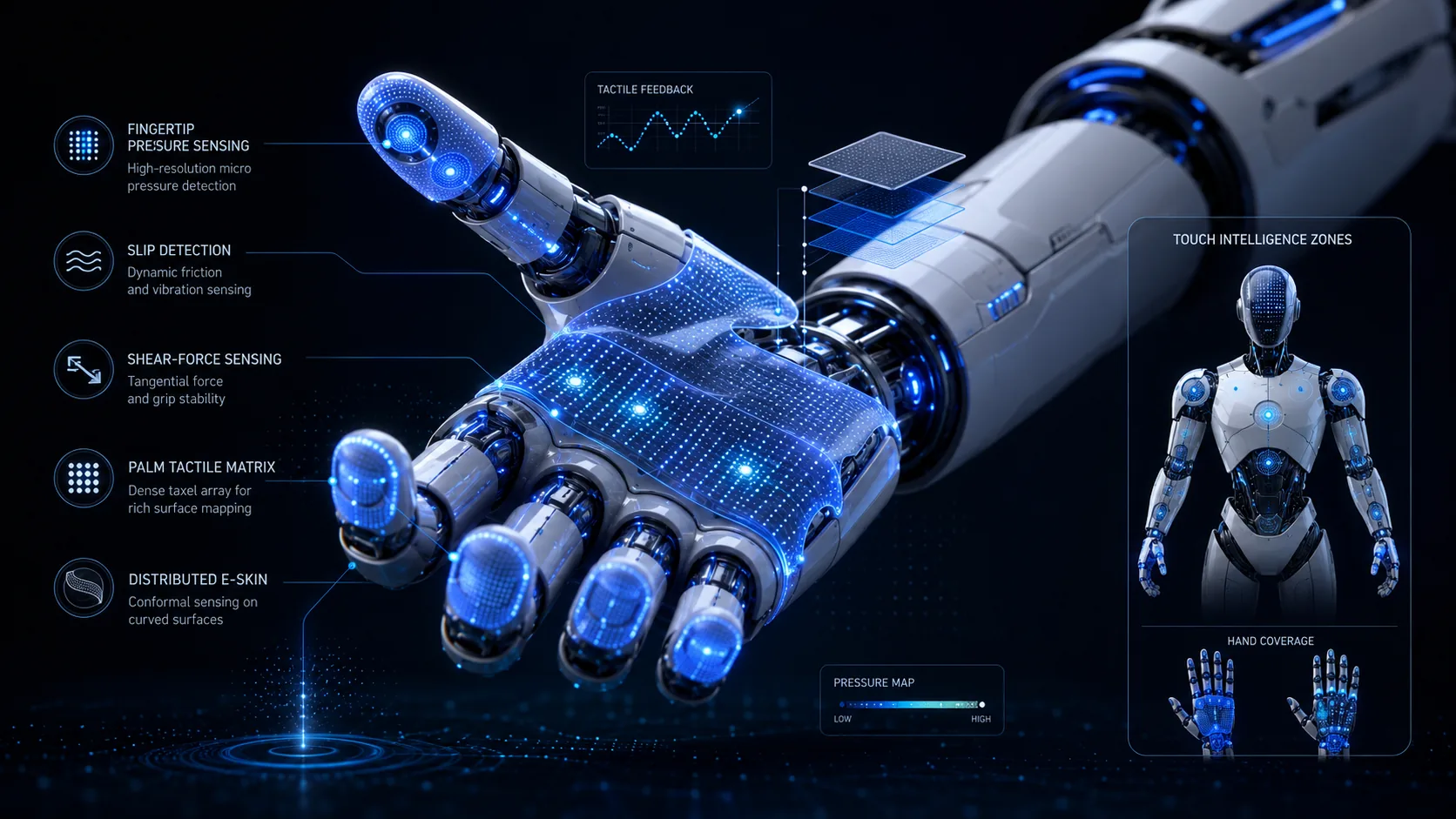
The pressure center shifted 1.4 mm and tangential force is rising, while no object deformation is detected. Reduce finger force and move support toward the palm center.
Fingertip sensing
High-resolution fingertip sensors capture contact, pressure, texture, local force and early slip.
Tactile skin / e-skin
Flexible sensing surfaces cover fingers, palms and curved robot structures, so contact is visible beyond a single point.
Integrated tactile hands
The hand, sensors, signal fusion and adaptive grip control operate as one closed-loop manipulation system.
Pressure, shear, proximity and temperature.
Noise filtering and a spatial contact map.
Slip, impact, deformation or stable-grasp class.
Object, material, tool and work goal.
Grip, speed, pose and force-envelope correction.
The outcome is validated and returned to the skill.
A useful hand needs low-latency signals, a spatial pressure map, slip detection, deformation boundaries and a closed-loop grip-control cycle.
Every touch becomes an auditable event, and every successful correction becomes a candidate for validated operational competence.
The camera sees the object. The robotic arm touches it. MetaCore understands contact.
Real work begins where vision ends: the part slips, the joint resists, the surface deforms. The MetaCore AI Expert reads force, torque, and the tactile field as one physical event history — and helps the robot adjust action before failure occurs.
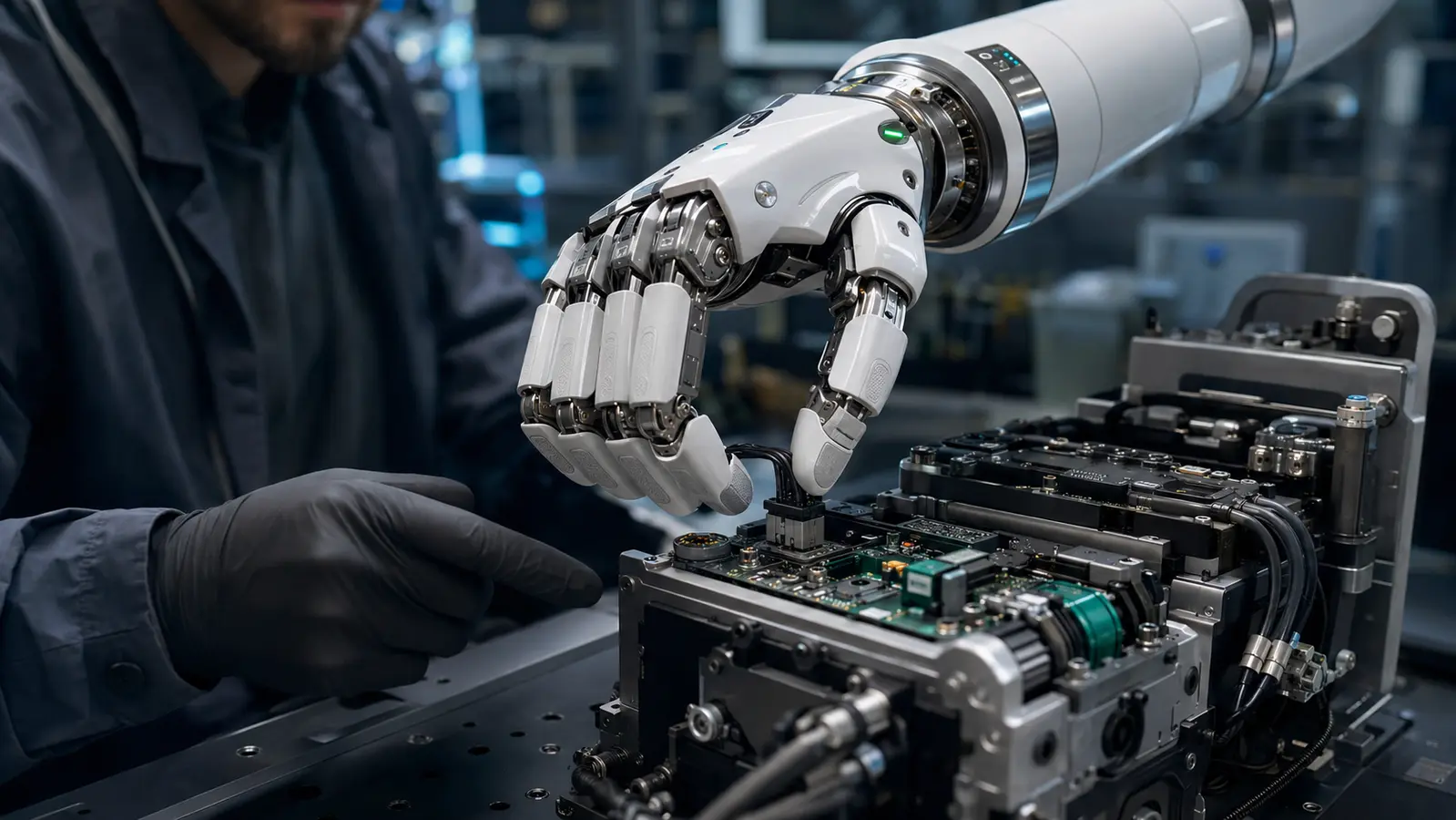
The system reduced speed, released force, and corrected the wrist without interrupting the task. This recovery profile was saved as a candidate for engineer approval.
Not just fingers. The full cycle from teleoperation to deployment.
A dexterous hand becomes valuable only when mechanical structure, drive transmission, tactile sensing, control, training, data collection, strategy training, and on-site deployment form one closed learning cycle.
Finger layout, DoF distribution, thumb opposition, wrist interface, and compact serviceable packaging.
Tendon rope, linkage, gear, modular actuator, or mixed route is chosen by task, weight, reliability, and cost.
Pressure, proximity, temperature, and slip signals turn contact into operational events.
Multi-finger synergy, force-position control, anti-slip correction and wrist-hand coordination.
Human demonstration links expert contact strategy with robotic action data.
Video, action, tactile, joint state, gripper state, and force profile are captured together.
Demonstrations and failures become skill candidates, simulation tests, and validation gates.
Only validated manipulation patterns move from training to real work with human approval.
Mechanical Structure
- Drive Transmission
- Tactile / Electronic Skin
- Control System
- Remote Operation / Teaching
- Multimodal Data Collection
- Simulation / Strategy Training
- On-site Deployment
- Operational Skill Memory
Hand as hardware
- How many fingers?
- How many DoF?
- What is the drive route?
- What speed and force?
Hand as an operational loop
- Which contact events are recognized?
- Which demonstrations became repeatedly used skills?
- Which failures improved the strategy?
- Which patterns are validated for deployment?
teleoperation_session:
  task: "insert_connector"
  robot_hand: "dexterous_hand_A"
  drive_route: "mixed_tendon_gear_modular"
  data_streams:
    - video
    - action_mapping
    - joint_state
    - gripper_state
    - tactile_pressure
    - slip_signal
    - force_profile
  contact_events:
    - stable_grip
    - micro_alignment
    - resistance_detected
    - successful_insertion
  metacore_outputs:
    - skill_candidate
    - failure_patterns
    - recommended_training_set
    - validation_required
    - deployment_gate
Small linear "muscles" decide precision robotic work.
Micro electric cylinders are compact linear actuation modules hidden in hands, wrists, small clamps, and fine-adjustment mechanisms. Through screws, nuts, guides, feedback, and limit protection they convert motor rotation into precise push-pull motion. In humanoids these small mechanisms often decide whether the robot can reliably reset, align, tension, or fine-adjust a task.
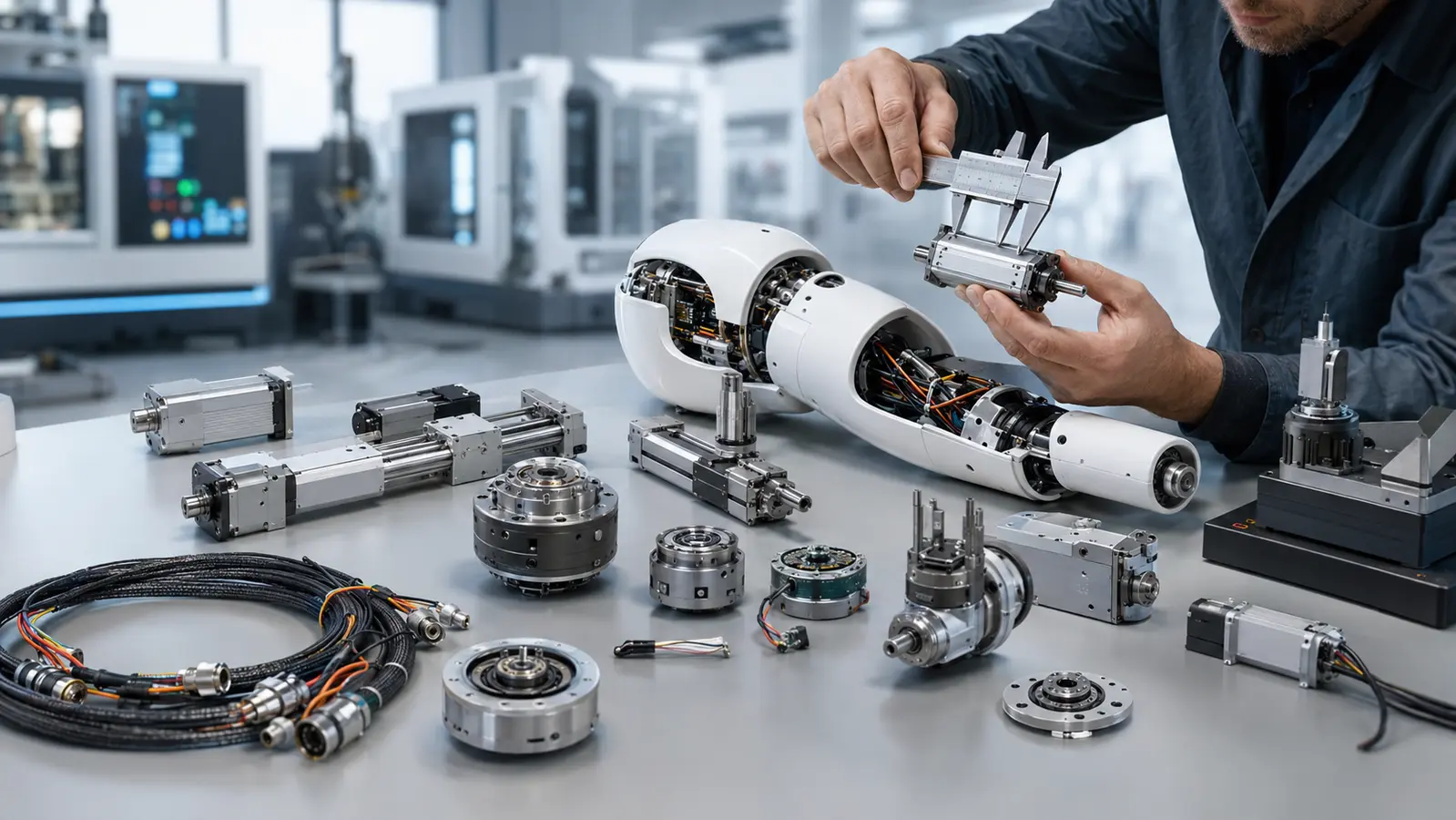
Short-stroke linear motion for ejection, reset, release, opening, and local correction.
Precise force and stroke control for grippers, fixtures, end-effectors, and tool-side mechanisms.
Reliable actuation for safety latches, mechanical limits, and quick-change interfaces.
A small linear correction can tune cable preload and finger transmission response.
Micro compensation for wrist tools, calibration, alignment, and precise local positioning.
Integrated sensors and limit protection turn a small push rod into a controlled system.
Component stack
- Motor and coupling
- Lead screw / ball screw and nut
- Push rod or sliding table
- Guide structure and bearings
- Encoder, feedback, and limit protection
- Housing and mounting references
Selection criteria
- Thrust and continuous load margin
- Stroke, speed, and response time
- Repeat positioning accuracy
- Backlash, friction, and noise
- Volume, weight, and wiring space
- Lifecycle, sealing, and lubrication
micro_linear_actuation_event:
  component: "micro_tension_adjuster"
  actuator_type: "micro_electric_cylinder"
  work_object: "precision_adjustment"
  monitored_state:
    stroke_position: "2.4mm"
    thrust: "within_limit"
    backlash: "increasing"
    noise: "normal"
    temperature: "stable"
    limit_switch: "not_triggered"
  metacore_output:
    - reduce_adjustment_speed
    - inspect_screw_and_nut
    - update_cycle_maintenance_rule
    - compare_supplier_batch
    - require_validation_before_deployment
A joint is where motion becomes measurable stress.
A humanoid is built around recurring joint actuator modules. Each joint is a compact mechatronic system: motor, transmission, sensors, bearings, housing, wiring, thermal path, and control board. MetaCore links actuator behavior to work context so load, overheating, backlash, encoder drift, and maintenance events become operational knowledge.
Force / torque feedback reveals load, contact, safety, and true joint response during work.
Harmonic reducer, planetary reducer, roller screw, and ball screw convert motor power into useful motion.
Frameless motors and hollow cup motors determine power density, inertia, response, weight, and miniaturization.
Heat, backlash, vibration, noise, current anomaly, encoder drift, impact events, and wiring fatigue become diagnostic signals.
Joint movement
↓
Sensor feedback
↓
Operational event
↓
Work context link
↓
Supplier / design insight
↓
Validated maintenance or redesign rule
Component BOM view
- Motor
- Reducer or screw
- Encoder / torque sensor
- Bearings, housing, wiring
MetaCore View
- In which task did load occur?
- Which motion causes a torque spike?
- After how many cycles does backlash grow?
- Which maintenance or design correction is validated?
joint_event:
  joint: "right_knee_actuator"
  work_object: "stair_climbing_test"
  event_type: "torque_spike"
  sensor_state:
    torque: "above_expected"
    temperature: "rising"
    encoder: "micro_drift_detected"
    vibration: "increased"
  interpretation:
    likely_cause: "load concentration during step transition"
    confidence: 0.78
  knowledge_output:
    - reduce_acceleration_profile
    - inspect_reducer_backlash
    - update_maintenance_interval
    - send_supplier_feedback
Small materials decide long-term robotic reliability.
PEEK is not a cheap metal substitute. It is a high-quality engineering polymer used selectively in small robotic components where lightweighting, wear resistance, low noise, dimensional stability, and electrical insulation matter more than pure load-bearing strength. In humanoids these small material choices directly affect actuator load, arm inertia, cable life, noise, heat, maintenance cycles, and field reliability.
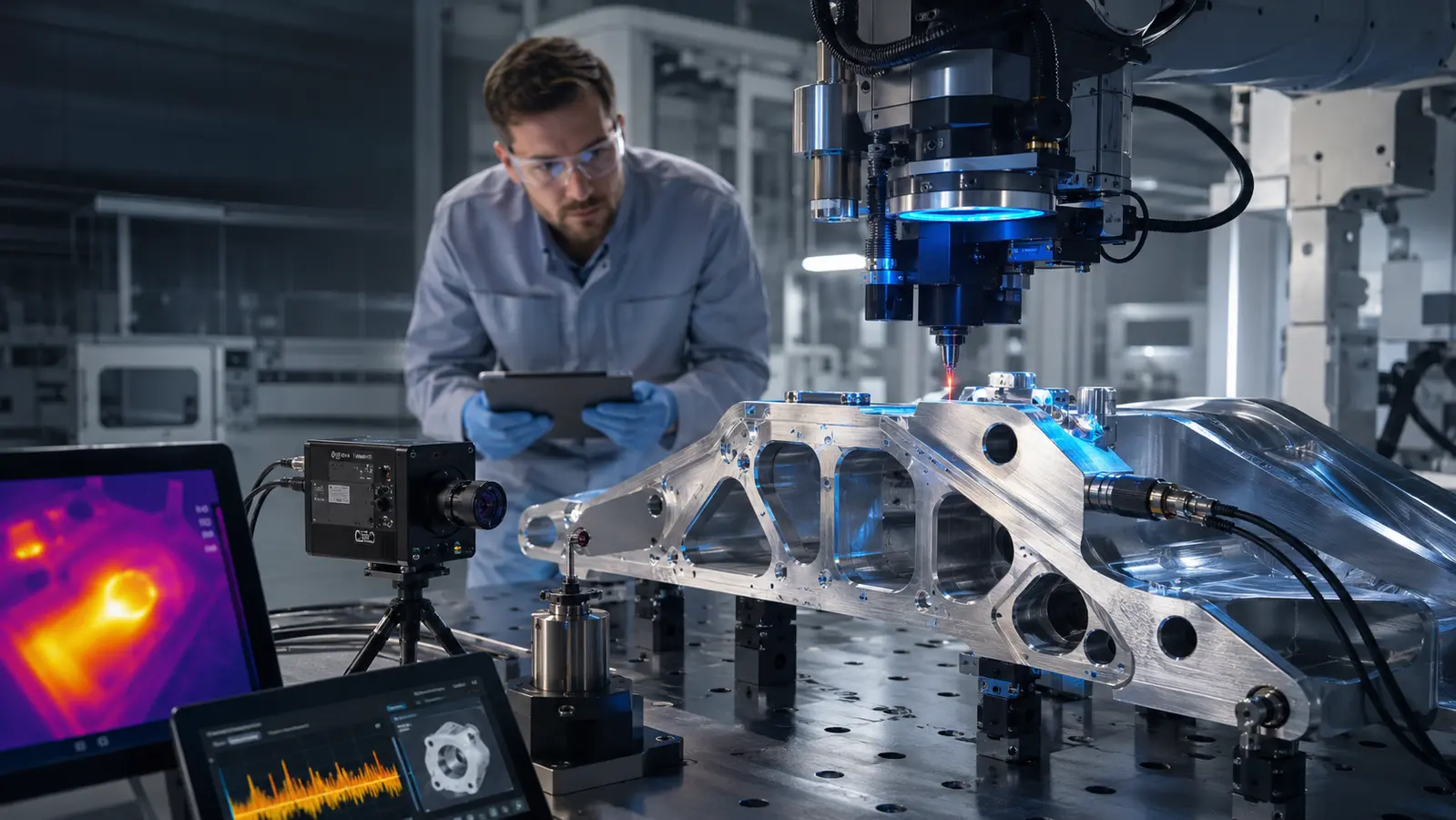
Reducing grams in fingers, wrists, guides, and small internal parts lowers inertia, torque demand, and battery load.
PEEK can be used in bushings, sleeves, guides, small gears, and sliding interfaces where friction cycles accumulate.
Local friction pairs and small transmission parts can run quieter than metal-on-metal contact when designed correctly.
Sensor mounts, controller supports, cable fixings, and motor-side brackets need mechanical support and electrical isolation.
Stable clearances matter in miniature joints, cable routing, encoder areas, and repetitive assembly workflows.
PEEK still requires lifecycle validation after preload, heat, vibration, and alternating loads before mass production.
PEEK use cases in humanoids:
- finger joints and tendon guides
- small internal gears and pulleys
- bushings / shaft sleeves / spacers
- wrist and hand cable routing parts
- bearing cages and low-load sliding parts
- sensor brackets and connector housings
- motor / controller insulating supports
- wire harness fixation and protection
Metal where strength dominates
- Primary load-bearing frames
- Hip / knee / ankle impact paths
- Primary pulleys and heavy transmission cores
- High-stiffness structural joints
PEEK where behavior matters
- Low-friction miniature components
- Quiet arm and wrist transmission parts
- Electrical insulation near sensors and controllers
- Stable guides, sleeves, and cable protection
material_operational_event:
  component: "finger_tendon_guide"
  material: "PEEK"
  robot_area: "dexterous_hand"
  expected_value:
    - lightweight
    - low_friction
    - low_noise
    - dimensional_stability
  monitored_events:
    - wear_growth
    - noise_increase
    - clearance_drift
    - cable_friction
    - temperature_rise
    - creep_deformation
  metacore_outputs:
    - inspect_after_cycles
    - maintenance_rule
    - supplier_feedback
    - redesign_material_candidate
    - lifecycle_validation_gate
From precision manufacturing to operational intelligence.
A humanoid robot is not one product. It is a system of hundreds of mechanical, electronic, sensor, energy, and compute components. Precision manufacturing creates the body, the robotics stack executes motion, and MetaCore turns physical execution into operational knowledge.
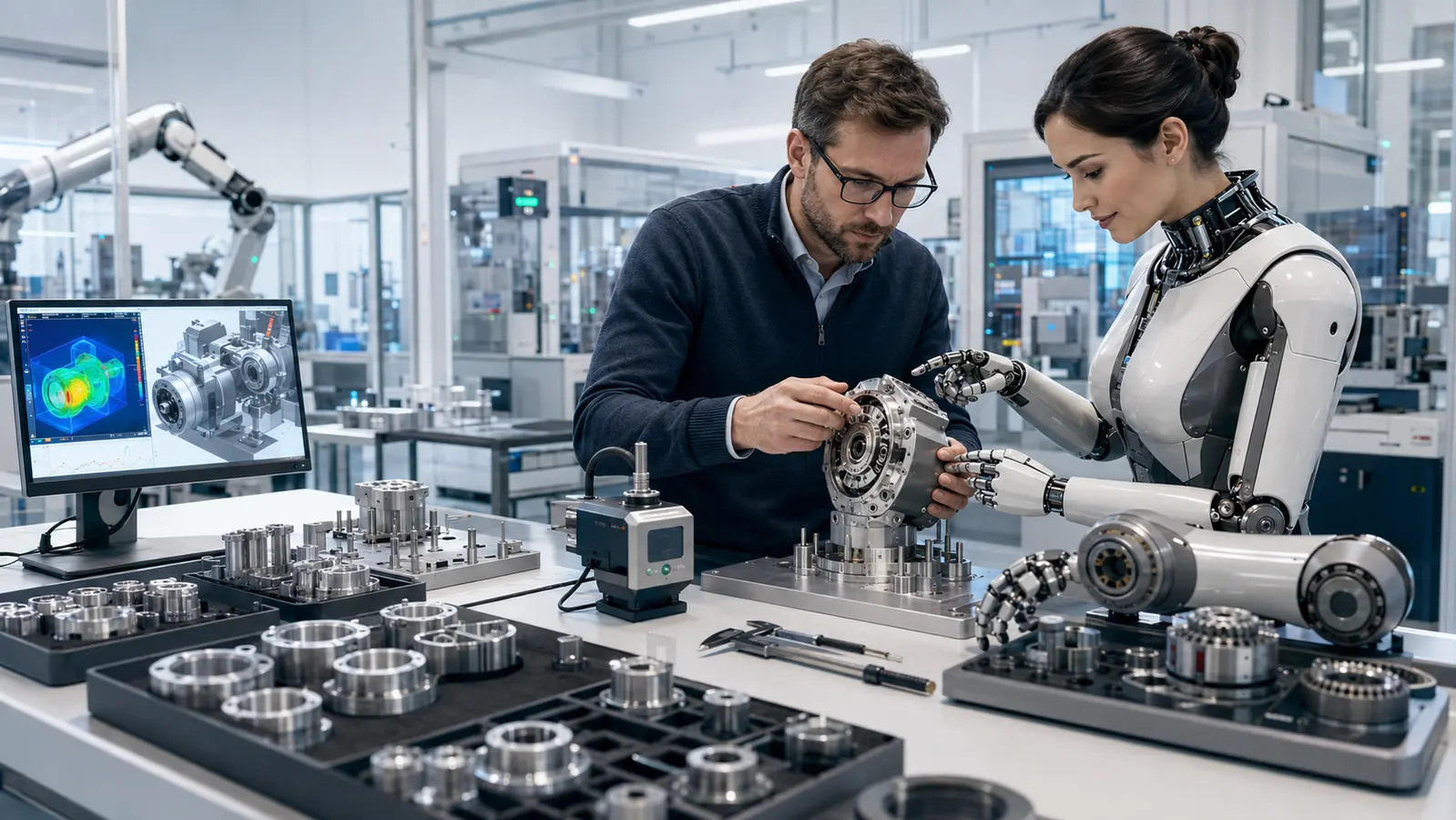
Joint housings, flanges, brackets, bearing seats, actuator covers, and precision interfaces.
Cross-roller bearings, thin-section bearings, harmonic drives, planetary reducers, and backlash control.
PCB, SMT, BMS, motor control boards, signal routing, flexible harnesses, and EMI resistance.
Component behavior in real work: overheating, vibration, torque spike, encoder drift, cable fatigue.
Supply Chain builds components
↓
Robot Stack executes motion
↓
Operational Events capture field behavior
↓
MetaCore links component behavior with work context
↓
Validated knowledge improves design, maintenance and fleet operation
Manufacturing view
- Who manufactured the part?
- What material and process?
- What are the tolerances?
- What is the test result?
MetaCore View
- In which work did the part experience load?
- Which operational event recurred?
- Which skill or motion did it affect?
- Which correction to validate for the fleet?
component_object:
  part: "knee joint housing"
  process: "CNC + anodizing"
  linked_skills:
    - walking
    - stair_climbing
    - kneeling
  operational_events:
    - torque_spike
    - overheating
    - vibration_growth
    - encoder_drift
  knowledge_output:
    - maintenance_rule
    - design_revision
    - supplier_feedback
    - fleet_update_after_validation
MetaCore controls not one drone, but groups, categories, and mission context.
MetaCore Robotics is not a military product and is not intended for strike systems. In a civil environment it can act as an AI operator above drone, robot, and sensor networks: for inspection, territory maintenance, rescue coordination, agriculture, infrastructure monitoring, and environmental data collection.
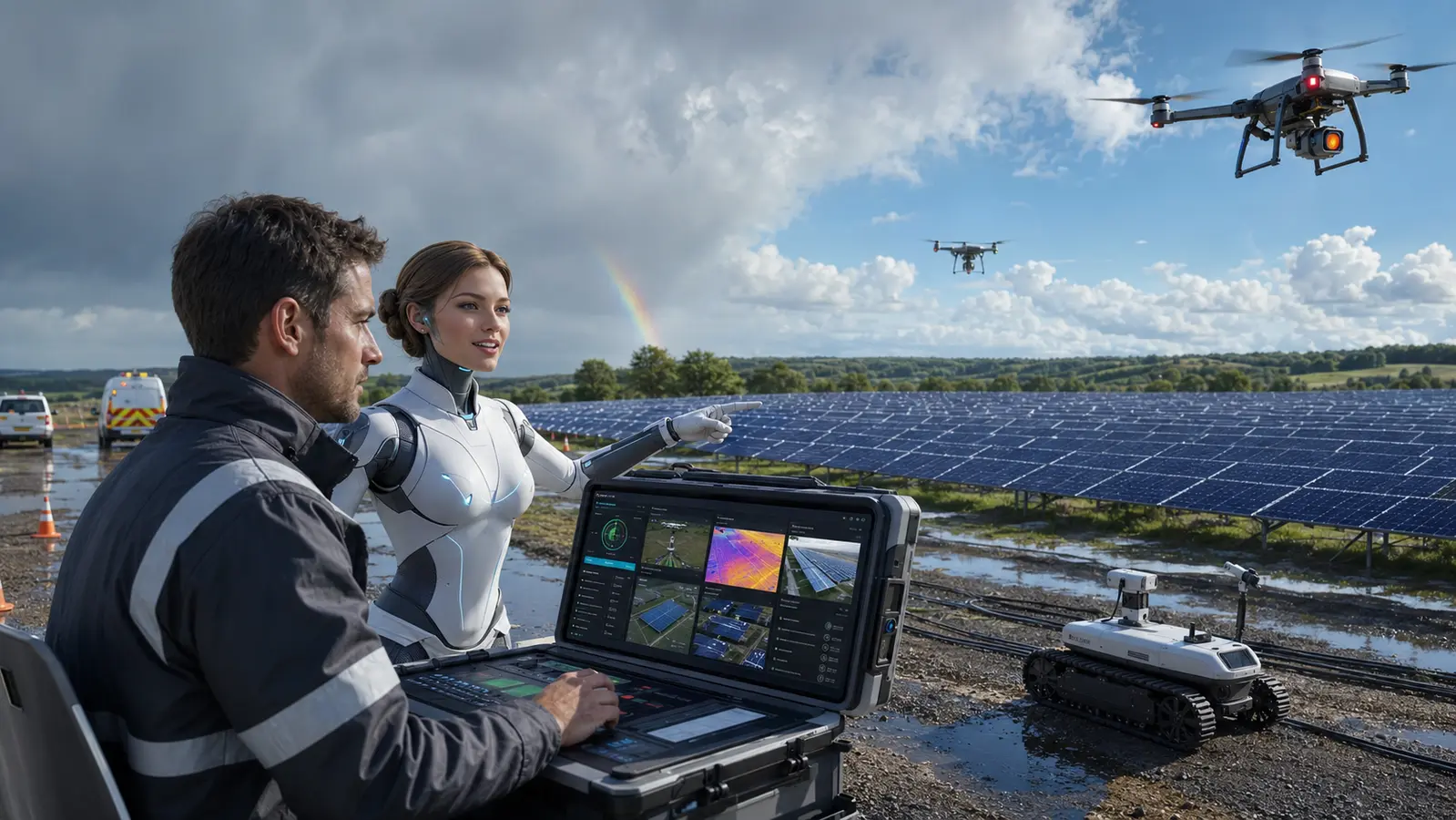
Drones are grouped by role: visual inspection, thermal monitoring, mapping, relay, backup agent.
Not every agent gets the same task. MetaCore assigns work by zone, risk, priority, and permission.
Not raw data is recorded, but events: link loss, battery drop, obstacle, route deviation, human handoff.
The MetaCore AI operator helps the human see group state, recommend action, and prepare a decision for approval.
Civilian Mission
↓
Drone / Robot Groups
↓
Role Categories
↓
Communication Policy
↓
Operational State
↓
MetaCore AI Operator
↓
Authorized Approval / Handoff
↓
Validated Operational Knowledge
Without MetaCore
- Each drone is monitored separately.
- The operator drowns in cameras, telemetry, and alerts.
- Events often remain in separate logs.
- Experience is hard to transfer to the next mission.
With MetaCore
- Agents are managed by groups and categories.
- The operator sees overall operational state.
- Events are classified and linked to mission context.
- Validated knowledge returns to the next operation.
network_object:
  mission: "Inspect solar park after storm"
  agent_groups:
    visual_scan: [drone_01, drone_02]
    thermal_check: [drone_03]
    relay_support: [drone_04]
    standby: [drone_05]
  categories:
    - infrastructure_inspection
    - safety_monitoring
    - anomaly_detection
    - operator_handoff
  operational_events:
    - route_blocked
    - weak_signal
    - battery_low
    - thermal_anomaly
    - human_review_required
  human_policy:
    approve_route_change: true
    approve_high_risk_area: true
    final_decision: "human"
A humanoid demo proves capability. A validated supply chain proves readiness.
One humanoid is not just a robot, but an industrial system: actuators, transmissions, arms, sensors, controllers, batteries, structure, harnesses, test equipment, and service processes. When the demo phase ends, the real question is not whether the robot moves, but whether the same quality can be repeated in series, maintained in the field, and validated through real operational events.
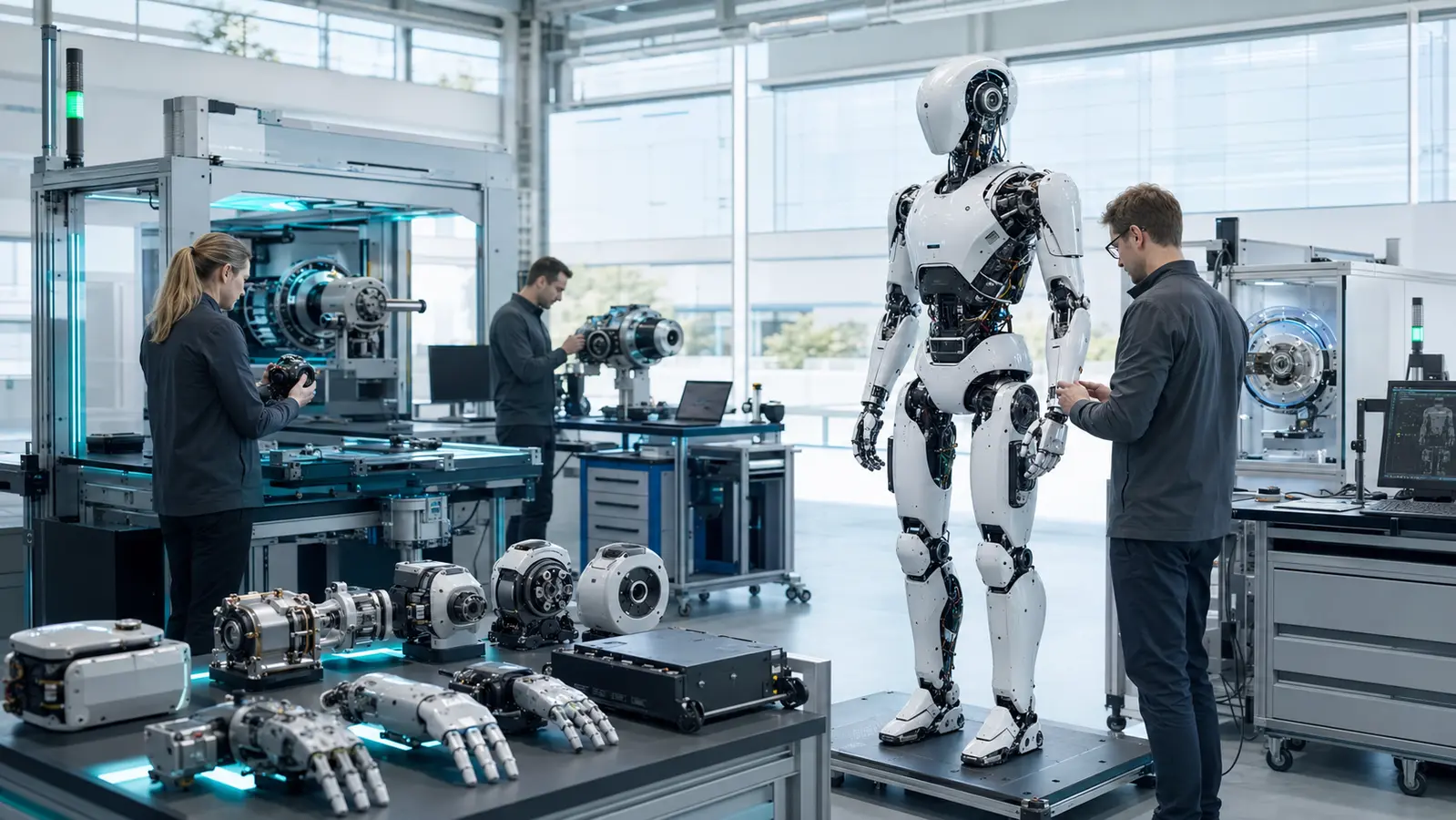
Clear version, material, measurement method, and test criteria.
Sample quality, delivery discipline, traceability, and a repeatable process.
Temperature, clearance, noise, load, and failure pattern.
Clear maintenance rules, rollback path, and responsible authorization.
Manual tuning, small quantity, engineering debugging, fast iterations, and not yet proven service lifecycle.
Identical parts, stable cycles, repeatable quality, calibration jigs, aging tests, and assembly discipline.
Not a catalog line, but sample verification, lifespan data, delivery records, contract status, and field failure history.
After how many cycles to inspect, what to replace, where real risk rises, and how field data returns to design.
Component Portfolio
↓
Qualified Supplier Pool
↓
Sample Verification
↓
Small Batch Delivery
↓
Lifecycle Testing
↓
Operational Events
↓
Mass Production Decision
↓
Maintenance & Redesign Knowledge
Market map view
- The company has a suitable product.
- The company appears on the supply chain diagram.
- There is technical capability.
- There is not yet proven mass supply.
Validated supply-chain view
- Sample passed tests.
- There is a small-series delivery record.
- Field events show stable lifecycle.
- Service and redesign rules validated.
supplier_validation_event:
  component: "knee actuator reducer"
  supplier_status: "qualified_pool"
  robot_model: "humanoid_prototype_A"
  test_context: "stair_climbing_5000_cycles"
  events:
    - temperature_rise
    - backlash_growth
    - abnormal_noise
  outcome:
    reliability_score: 0.74
    mass_production_ready: false
    required_action: "extended_lifecycle_test"
  metacore_output:
    - supplier_feedback
    - maintenance_rule
    - redesign_candidate
    - next_validation_gate
Not separate images. One Operational Coherence chain.
MetaCore LAB connects operator decisions, robotic action, actuator state, component validation and humanoid reliability into one understandable system.

MetaCore designs unique robotics, automation and Physical AI systems around real work.
Each project is shaped around a specific task, existing mechanics, electrical engineering, controllers, robotics stack, sensors, data flows, safety boundaries and the point of human decision. We do not sell abstract “AI for robots”—we design a coherent system from the physical component to validated work and operational memory.
Mechanics and mechatronics
Structure, joints, actuators, reducers, linear drives, end effectors, tools, tolerances and serviceability.
Electrical engineering and automation
Power, protection circuits, PLC, servo drives, VFD, I/O, sensors, SCADA and deterministic control.
Robotics and networking
ROS2, NVIDIA Isaac, MoveIt, vendor SDKs, edge compute, OPC UA, MQTT, time synchronization and secure network zones.
MetaCore Operational Coherence
Work Semantics, Work Objects, Execution Intelligence, Operational Events, Knowledge Loop and scoped-authority rules.
Do you have a robotics, CNC, automation or multi-device project?
Send an inquiry—we will help design a unique system, connect your existing equipment and prepare a safe path from pilot to validated deployment.
Bring us your robot. Add the Field. Measure the DELTA.
You already have the robot, mechanics, electronics and control logic. For the pilot we select one real task, record the BEFORE baseline, connect MetaCore Field through an allowed SDK/API/telemetry surface, and repeat the same task within the same safety boundaries. We evaluate a measurable DELTA—not a promise.
Your robot as it is today
We record current teaching time, success rate, retries, intervention, recovery, telemetry and engineering tuning effort. Nothing is judged by marketing claims—only by the selected real task.
The same robot with MetaCore Field
We measure whether the robot preserves task context better, detects deviations, reuses validated experience, hands problems to people more clearly and requires less repeated tuning.
One robot. One engineer. One real task.
Humanoids, cobots, manipulators, AMRs, inspection robots, CNC and other Physical AI systems. We begin with read-only evidence, then—only when justified—move to bounded integration and measure the DELTA.
You build the machine and its logic. MetaCore adds Digital Heart.
For manufacturers, MetaCore is not a replacement for the motion stack. Digital Heart is an Coherence Operating Layer for the robot: persistent task context, operational memory, evidence-linked reflection, failure/recovery knowledge and scoped authority above existing OEM control.
Manufacturer and integrator technology executes physical action.
Policy, mandate and scope define which role sets goals, boundaries, business logic and approves significant decisions.
| Capability | Robotics Stack | MetaCore |
|---|---|---|
| Motion planning / IK / trajectory | ✓ | — |
| Motor control / firmware | ✓ | — |
| Work Semantics | — | ✓ |
| Work Object / Operational Memory | limited | ✓ |
| Execution Intelligence | partial | ✓ contextual |
| Operational Events | logs | ✓ interpreted |
| Fleet-level validated knowledge | limited | ✓ after approval |
| Human handoff / audit trail | varies | ✓ |
You have real work. MetaCore gives it structure.
The AI MetaCore Expert is not a general chatbot. It becomes a friendly assistant for your engineers and operators: understands work context, connects devices, explains the situation, and grows reliable operational memory.
Do you have a workshop, an electronics lab, or a few devices?
MetaCore helps assemble processes into a clear system. Your team gets an AI Expert that knows work context, helps solve problems, and creates order without unnecessary bureaucracy.
Do you run production with a lot of equipment?
MetaCore connects machines, signals, documentation, and people into one controllable network. You see the big picture, and when needed can drill down to a specific device, cycle, or risk moment.
Do you manage complex logistics across multiple sites?
The AI MetaCore Expert can work with each team at their workplace while maintaining shared control, knowledge, and accountability structure across the network.
Devices, people, data flows, decision points, and existing signals on one work map.
Where human approval is required, what can be automated, and which events must become learning material.
One real process, clear measurement criteria, and a safe path from pilot to repeatable skill.
Authorized roles set goals, limits and priorities under policy, mandate and scope; risky patterns follow defined approval gates.
Skills are not published to the fleet without verification and a clear rollback path.
Every significant execution event must be explainable, traceable, and usable for learning.